
In Conversation
Navigating a Multipolar World:
In Conversation with the High Commissioner of South Africa in India Mr Anil Sooklal
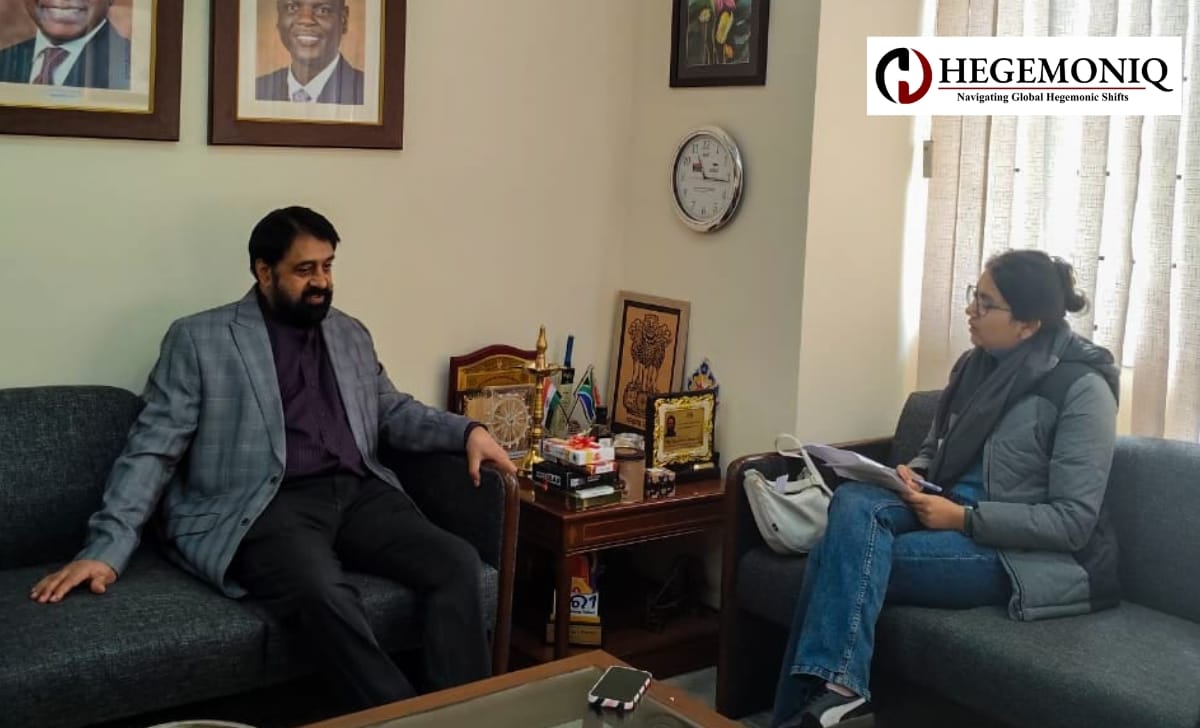
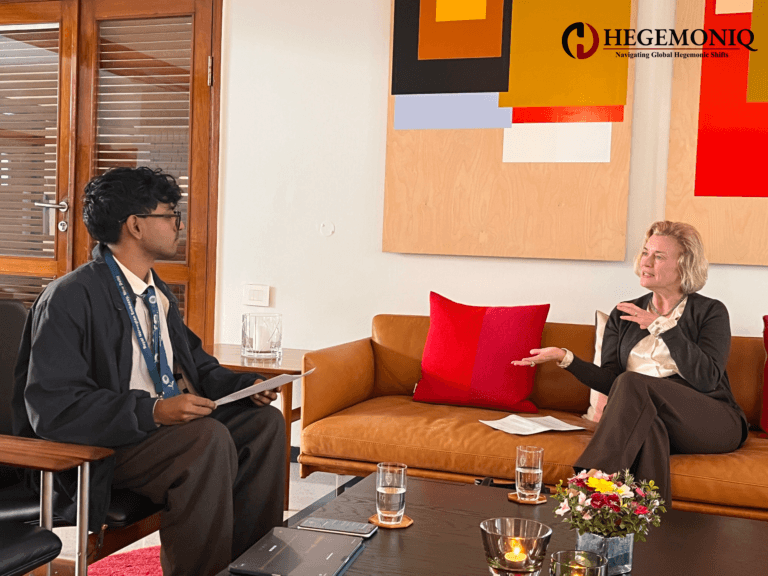
H.E. Mr. Anil Sooklal in conversation with Hegemoniq at the High Commission of South Africa, New Delhi.
Date of Interview
30 December, 2025
Interview Transcript with Anil Sooklal
HEGEMONIQ: I’ll just start with my first question to you, India and South Africa, the relationship that we share, it’s historically anchored in shared values. It is globally quite visible. But in the current geopolitical climate, where there’s a lot going on, how is Pretoria recalibrating this partnership towards a more functional and strategic partnership? How is the capital aiming to move towards that?
H.E. ANIL SOOKLAL: Well, I think there’s no need to recalibrate the relationship. You’re correct in observing that this relationship is underpinned by a shared history. A history that welded us together on a number of fronts during the period of colonialism. And apartheid in the case of South Africa. So, when South Africa became a democracy, it was natural that this historical underpinning of the relationship formed the basis of the bilateral relationship, including our multilateral interaction. So, the recalibration happened then, transforming a historical relationship into a functional, practical bilateral interaction and multilateral interaction. As countries that have a shared history and a shared vision of the global order, and being members of the Global South, it was natural that we’d have synergy on many fronts.
So, when you speak of recalibration, I think what you are actually talking about is the challenges that have emerged, especially at the beginning of this year, with the new US administration coming into being. And a number of measures, especially on the trade front, that has impacted not only our respective economies, but the global economy. But of course, the global economic situation is intertwined with global geopolitics. And of course, that also requires focused attention in terms of how we recalibrate our respective perspectives without sacrificing our core values and principles.
And I think India and South Africa have demonstrated, under tremendous pressure, that we are autonomous, independent countries that will not sacrifice our strategic autonomy just for the sake of populism and appeasing powers that seek to abuse their respective global standing internationally, based on the power equation. And I think that is a very important point.
But also, I think it threw up a number of challenges, as well as opportunities. The challenge is, how do we deal with this tarifisation and weaponisation of tariffs in this current era that we live in? The undermining of multilateralism, The imposition of unilateral measures, and of course, reversing the gains of globalization. All of this, I think, have forced us, in some senses, to relook the way we associate with each other, to look first and foremost at our national interests, which cannot be sacrificed under any circumstances, and do what is in the best interest first for our country, for our region, and then globally.
And I think all of us from the Global South have this common challenge, although I believe the Global North as well, are similarly thrown into turmoil because the traditional alliances between Europe and the USA is also on very fragile grounds, if one can speak of that. Your traditional security architecture, NATO in particular, have its own challenges. Not only in terms of the position taken by the USA vis-a-vis the share that Europe bears in terms of NATO responsibilities, which has been spoken of many, many times by President Trump, but also the fractures that have emerged as a result of the Russia-Ukraine conflict. Now all of this, of course, impacts on us as well, because global security is interrelated, and none of us are immune from what happens in one part of the world. It affects all of us.
But what I think also has been positive, it has got us as countries of the South, first of all, to relook our traditional partnerships, and to redefine some of these partnerships based on our national interest. Now you’ve seen that with India, where Minister Jaishankar has repeatedly spoken about India’s strategic autonomy, and that India will not be forced into any camps. South Africa has said exactly the same, that we will not sacrifice our autonomy.
I think you would have also seen that during our G20 Presidency last year, there was tremendous pressure on South Africa, and it was, without doubt, the most challenging G20 Presidency of the first cycle. And, you know, the outcome of our Presidency, despite all of these pressures, firstly, when we announced in December of last year our team and our priorities, one of the major members immediately disassociated themselves from it, and were very critical of the team that we have chosen, unfortunately reading something else into what was the intention of South Africa. And throughout the year, non-attendance at high level, most of the ministerial were not able to produce a joint outcome document, because, as you know, G20 works on consensus. There was tremendous pressure for the summit not to have a declaration, and the boycott of the summit by President Trump. All of that didn’t detract from South Africa sticking to the priorities we have set, and the support we received from the global community, all the G20 members, India included, Prime Minister Modi’s presence at the summit was a major statement of support, not just to South Africa, but I think to the G20.
So, I think what you are seeing is that so-called emerging powers, middle powers, are not buckling under the threats and strains of unilateral action being imposed on our respective countries. India currently faces very high tariffs. South Africa and the African continent have the highest tariffs.
In fact, all of the BRICS countries have been targeted, and unfortunately BRICS has been targeted. And if you look at the unilateral trade measures, they all have been very severe on BRICS countries. But what is, I think, critical is that BRICS is a very important formation, and India is a founding member of BRICS, and you take over the chair in a few days’ time, at a very critical moment. Not only for BRICS, but I think for Global South, and the global order that is currently unfolding, moving away from a unipolar, bipolar kind of world to a multipolar world that we all speak of, recognizing that there are major poles of power, that power is no longer concentrated in one region or within one country, and also that attempts to create a bipolar power system is not going to work, not in the current environment. But I think where India and South Africa are important pillars of the evolving global multipolar order is that we are vibrant democracies. And democracy has been undermined, unfortunately, and there’s various reinterpretations of what democracy is.
Even by those that don’t have democratic systems. Secondly, I think, you know, as countries that have a past of exploitation, of colonialism, and with similar developmental challenges, we have a common vision of what we’d like to see for our own people, but for our regions, for the Global South, but more importantly for being the architects of an inclusive global order that does not marginalize the majority. A global order that is underpinned by a rule-based system, underpinned by multilateralism, underpinned by the United Nations system, with the core purposes and principles of the UN Charter and international law being at the center of a global multilateral system. And I think these are the values that we constantly echo in all of our bilateral engagement, our multilateral engagement, and globally. We cannot allow the multilateral system to collapse. We have no alternatives.
Be in the UN system, including the World Trade Organization, which is under tremendous pressure at the present time. The core of the WTO has been paralyzed for the past number of years because the dispute settlement mechanism has not been functional and all of the rules that govern global multilateral trade have been basically thrown out of the window. But what I think countries like India and South Africa have demonstrated, and many others from the Global South, that despite the weaponization of tariffs and of global trade, there’s resilience in our systems. Our economies are not collapsing. We are recalibrating on many fronts. We are diversifying, and I think that’s the positive part of this, that we became too dependent on one or two centers of global trade and diversifying of global supply chains and looking at our own internal systems in terms of our own productivity. You have Make in India. We have Make by South Africa. These campaigns that I think force us to relook our global trading patterns, including our domestic habits.
So, I think these are the similarities, the challenges, and also, as I’ve said, opportunities that have arisen. One of the positives is that new technologies are not confined to one or two centers. Yes, some are more advanced than others, but countries like India have demonstrated that technology can be a major push factor in addressing developmental challenges, like you have done through your UPI system for us, or TPI. And this has been shared with other countries. In South Africa, we are looking at the same and trying to put systems as such in place. So that, I think, has also been a major factor where, unlike the industrial revolution that was concentrated in the global north, the so-called fourth industrial revolution focused on new technologies and now the fifth of AI and so forth, the global south is not at the margins. The global south is very much at the center of it, including if you look at Africa. We’ve recognized that Africa may have missed out the industrial revolution, but new technologies is enabling Africa to leapfrog and to become part of the global mainstream, like countries like India, Brazil, Indonesia and others from the global south have demonstrated.
So, these are the synergies and areas where we continue to work together. And I think forums such as BRICS, IPSA in the case of India, Brazil, South Africa, become even more relevant today. And I think we are quite excited about India’s chairship of BRICS, like you did with the G20. You elevated the G20 to another level. And I believe that under India’s chairship of BRICS in 2026, you will find that BRICS will come more to the fore and BRICS will play a more constructive role in terms of addressing our common challenges, not just as it affects the global south, but globally.
HEGEMONIQ: With the recent expansion that has happened within the BRICS, there’s a global debate right now going on about what exactly is the identity that BRICS holds as a body, or has been holding for the past so many decades. Within this identity and the shift that we are probably seeing, there’s of course the US tariffs factor. So, with India being set to host the 2026 summit now, does South Africa view the expanded BRICS primarily as an economic counterweight to Western mechanisms, or rather more as a bridge for developmental cooperation? And if we look at this aspect of it, how do we maintain cohesion amidst this expansion that we see currently?
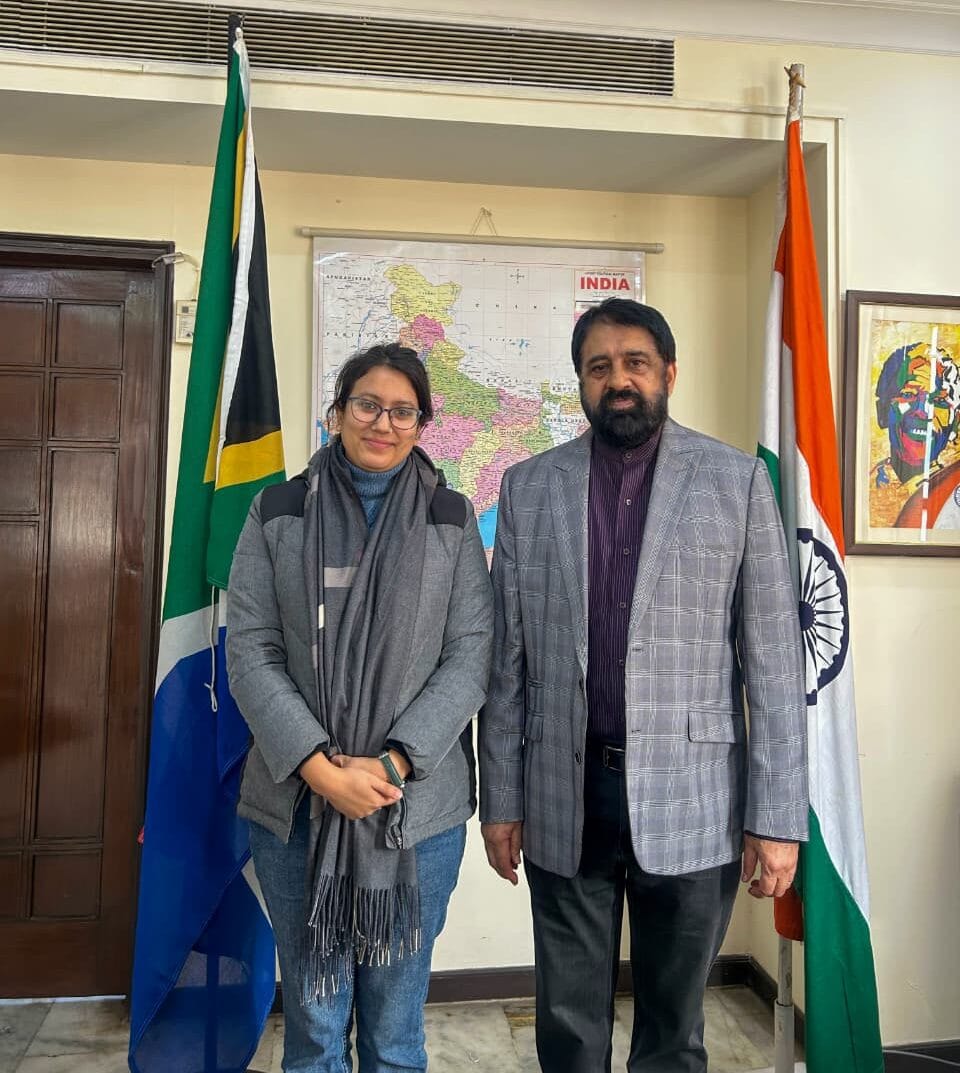
H.E. ANIL SOOKLAL: Well, I think, you know, the expansion of BRICS, which was agreed to during the Johannesburg Summit in 2023, was a carefully thought-out process by the leaders. I recall that in 2018, when we chaired BRICS for the second time, South Africa put on the table the issue of expansion, because there’s been constant pressure over the years by other countries wanting to become members of BRICS. And we as “Sherpas”, when we raised this as an issue, that perhaps it’s time that we look at expansion, the leaders told us, look, we need to first further consolidate the base that we have built, the five of us, so that we feel that we are solid enough to absorb expansion. And I think our leaders, that’s why they are leaders and we are Sherpas. When I look back, I would think that was great wisdom. Because it gave us another five years, between 2018 to 2023, when expansion was back on the table.
And I think in 2023, when we started discussions around expansion, BRICS had consolidated itself, firstly, amongst the five of us. We had established an ethos amongst ourselves, where we understood each other, we understood the vision, the collective vision, but also the individual visions and limitations. We understood each other’s red lines. And there was respect in terms of where we would like to go and the capabilities of each of us. And I think that was a very important basis in terms of consolidating a core. And I believe that that core is solid. And only when you have a solid core you can start expanding. And prior to that, perhaps the core was still evolving and there were some fragilities.
But more importantly, apart from the inner core and the coming together of the five, the impact that BRICS started having on the global community, that started consolidating. The fact that in 2018, you had a few countries knocking on the door, but by 2023, it was a flood, over 40. And what brought about this, within a five-year period. Of course, I think you had several factors that led to this. I think COVID played a major factor because COVID not only demonstrated the fragilities in terms of global cooperation and the undermining of the multilateral system and the need for the Global South to work together, because it was Global South countries, India, China, Russia, that provided vaccines to the Global South. We were left, Africa especially, we were left to our own means. We didn’t have the capacity because we have fragile health architecture. But it was BRICS that came to the fore. And I think this is also demonstrated that BRICS, as a cohesive force, can be a force for global good, not just for the Global South.
And therefore, as I said, the rise of BRICS as a Global South power started impacting on countries of the Global North to take the BRICS more seriously. Many thought that the BRICS is a passing phase, that it will come together and eventually fizzle out. But the contrary emerged as we started the presidency of BRICS in 2023, which marked the 15th anniversary of summits. BRICS had emerged as a consolidated voice of the Global South, a trusted voice of the Global South. I recall many of the European ambassadors in Pretoria asked for a briefing at the beginning of our chairship in 2023. And the question they raised was, why is there such a demand from countries wanting to become members of BRICS? I said, there’s only a demand to become part of a global body if that body is respected and having a positive impact. And naturally, these countries, which were weighty countries also of the Global South, countries like UAE, Indonesia, Saudi Arabia, Argentina, all of whom were not Mexico, were knocking the door of BRICS. They have faith that BRICS is moving in a positive direction and carrying with it not just the concerns of the five, but the concerns of the entire developing world, the majority. And working towards reinforcing the very architecture that we built in 1945 to create a rule- based global order with the UN at the center.
All of this was being undermined. But BRICS was the beacon that was flying that flag high and championing that cause while others were moving more and more towards unilateral measures and double standards in terms of global security. Because by 2023, you had, of course, the complexities of the Russia-Ukraine situation. But equally important what was happening not just the development within BRICS, but starting with Indonesia’s presidency in 2022, you were having now for the first time in the history of the G20 four consecutive presidencies of the Global South Indonesia, India, Brazil and now South Africa. And that was going to dramatically impact on not just the G20 but on the global community. It was to demonstrate that the Global South is at the center of global decision- making, no more on the margins and that the Global South can provide leadership at the most difficult and challenging times in modern global history. You had the Russia-Ukraine conflict, you had the challenges of COVID even though when Indonesia took over COVID had subsided. But the impact of that was still being felt. And, of course, the Gaza situation that was to erupt later. But through all of these countries of the Global South demonstrated that they were capable of providing global leadership under the most difficult and challenging circumstances. Indonesia demonstrated this. India elevated the G20 to a People’s G20 and demonstrated global leadership. Brazil carried through and South Africa carried through. And I think this is a very clear message that formations like BRICS are at the center of the evolving global multipolar order that we are seeing. And you saw this too, there was a synergy. You know, we hosted the BRICS Summit and about three weeks later India was to host the G20. But it was the first time that you had a BRICS Summit with over 60 leaders. It was the largest ever BRICS Outreach in 2023. With the entire African continent and all the major countries of the Global South were invited. And what transpired in Johannesburg was a wake-up call to the Global North. The Global South has arrived and the Global South is a powerful entity that is no longer prepared to sit on the margins. And that impacted also on the outcome of the G20 Summit. India was under a lot of pressure because of the Russia-Ukraine situation. But you had a very successful Summit. A Highly successful Summit. And demonstrated that despite all the fractures within the G20 family India was able to hold the center and bring about a positive outcome. Not just of the G20 but for the global community. So, I think these are very important major events that are influencing even now the challenges we face the way we respond to this. We are no longer weak and powerless. We have recognized our own power. We have recognized that we will not compromise our sovereignty at any cost. And at the same time, yes, we are feeling pain all of us that are hit with high tariffs. Of course. But we have survived greater pain. And we have come out stronger. And I believe this past year has demonstrated our resilience our strength and our creativity to deal with challenges and to be optimistic about the future and I think this in a sense also strengthens the cooperation between ourselves as countries of the Global South and increasingly you are seeing voices from the Global North. The Finnish Prime Minister has been speaking very openly and so has Merz from Germany that the Global North needs to re-calibrate its relationship with the Global South. The Secretary- General Guterres has been saying this openly for the past two or three years that the global multilateral architecture especially the Security Council is outdated, it’s no longer fit for purpose and therefore it will become ineffective in addressing its mandate as the harbinger of global peace and security is not able to do that any longer and the whole multilateral system that we have been talking about, India, South Africa and others, about reforming the whole multilateral architecture to make it relevant to 2025 because we have moved a long distance from 1945.
HEGEMONIQ: With bilateral trade between India and South Africa recently crossing the $19 billion mark, it has demonstrated a lot of strength and resilience. So, how is the High Commission planning to diversify this trade basket beyond traditional commodities that have been in focus so far? And additionally, which sectors do you identify as the next strategic drivers that will integrate our two economies into global value chains? I particularly mean high-tech manufacturing, and as you rightly pointed out, the digital infrastructure, which currently is at the forefront. What are your thoughts on this?
H.E. ANIL SOOKLAL: Well, I think I’ve always maintained that trade between India and South Africa is very vibrant but underwhelming. It’s not where it should be. The potential to grow this trade substantially is vast, and I think we need a concerted effort on both sides, and perhaps, as I’ve mentioned, these new challenges imposed on us is the catalyst for us to deepen and diversify more the trade between our two countries to fully unleash the vast potential on a number of sectors.
We at the High Commission have identified about four or five critical sectors that we need to give greater attention to, and firstly, if you look at this sector of energy, especially green energy, we both have major challenges and opportunities on this front, and I believe India has a leading power in terms of renewables. You chair the Global Solar Alliance, for example. The potential that we have in terms of energy, especially green energy, is something that’s not yet fully tapped, so that can be a very critical sector. Infrastructure. Africa, including South Africa, has a vast need for infrastructure development on all fronts. I’m talking not just in terms of port, railroad, but also digital infrastructure. That’s an area for tremendous collaboration, given, in many senses, the strengths that you have that we can jointly develop for the benefit of both our countries, but also in terms of India’s Africa agenda.
As I indicated to you, one of the challenges thrown up by COVID with regard to Africa was our fragile health infrastructure, and India is regarded as a pharmaceutical hub of the world, and I believe in the health sector, there’s tremendous opportunities to deepen our collaboration. We have a number of Indian companies already housed in South Africa, all the major ones are there, but also, you know, the World Health Organization, together with the African Union, has designated South Africa as the hub, the African vaccine hub, and by 2040, we hope that Africa can produce over 60% of its vaccine needs within the continent, and I believe India can play a major role in partnering with South Africa and the African continent, not just in terms of vaccine production, but in terms of our larger health infrastructure, including medical supplies and equipment.
So, that’s another low-hanging fruit there, and then, of course, the agricultural and agro- processing sector. I mean, in India, at the moment, we are opening up our markets to each other on a number of fronts in terms of fruits and vegetables, but there’s such vast opportunities in this, given, you know, South Africa is a net food importing country, and we shouldn’t be, so is Africa, and yet you are a food surplus country in terms of production. How can we jointly work together to scale up both the agricultural sector as well as agro-processing? So that would be the third area that I think is critical. Fourthly, the mining and mineral sector, including critical minerals at the forefront, and as you know, Africa is a major, major repository of critical minerals. We all have needs for this jointly processing in terms of, you see, what we are saying, not only in South Africa, but within Africa, there’s high demand for our minerals, but by and large it’s been extracted without any value- add and benefit to the African countries. What we are saying, what we need to do, is to ensure that we enter into mutually beneficial partnerships, and this is where we’ve been having discussions with India, and I believe this is a sector that has tremendous opportunities.
South Africa, as you know, is a mining country. Traditionally, mining has been the mainstay of, one of the mainstays of our economy, and yet again we believe we can also work with India, because you have not fully exploited the mineral resources that you have at your disposal, and some of the latest mining technologies, including our universities in terms of studies in mining and mineralogy, we have some of the best. So that’s another very critical sector, and of course, as I’ve said, the ICT sector is also important for us, and of course tourism. Tourism should not be underestimated. It’s a major, major boost of the economy, and I believe much more needs to be done, including direct flights between our country, which we don’t have at the moment. It was there pre-COVID, and I’m hopeful that in 2026, this will be reintroduced, and I believe people-to- people interaction, and we shouldn’t forget these soft power issues like culture, art, music, and dance. That is a major factor in bringing countries together, so we share a lot in that front as well. So, these are the few, I think, critical sectors, focus sectors, where I believe we need to put more energy that can scale up and diversify our economic business.
HEGEMONIQ: As the first African nation that led the G20, how will South Africa ensure its continuity with the New Delhi Declaration(G20 declaration, 2023)? And this declaration I’m particularly referring to in terms of climate finance and the inclusion of the African Union, and more specifically, what are the policy deliverables that Pretoria aims to achieve for the continent through this?
H.E. ANIL SOOKLAL: Well look, there has to be, one of the things we have seen, especially over these past four presidencies, is continuity. You can see a common thought pattern in terms of the critical issues, including the issues of climate action and climate finance, which was there throughout, starting with Indonesia, of course it was on the agenda of the G20, but it received more focused attention during our presidencies. And of course there’s great resistance. What happens within, as you saw in COP-30, the appetite, when you have a major, the most powerful global economy walking away from the climate negotiations, that’s naturally going to impact, but it doesn’t paralyze. And you saw that COP-20 also produced a positive outcome, all of the critical issues, including commitments made that have not been delivered in terms of the Green Climate Fund, and in terms of technology sharing. All of these issues, there’s great resistance. And we as countries of the Global South keep these issues alive and keep the pressure, because we are in the current dilemma in terms of the global environment, not because of our making. It’s because of what happened in terms of the industrialization of the Global North. They point fingers at us today, of course we are the largest emitter on the African continent, but in the totality of it, it’s a very small fraction. So is India, of course China a bit bigger. But all of this damage that has been done is not because of us. In the first instance, it’s because of those that today don’t want to meet the commitments in terms of helping us to transit from fossil fuels to green energy.
And it’s again that selfish mentality of not wanting to share technology, but putting pressure in terms of timelines by which we must achieve net zero emissions. And I think again, India and South Africa, we are part of the basic group, and we have been a very solid block as basic within the UNFCCC negotiations, in terms of the concerns that we have as Global South countries. Our commitments that we have made, you at 2070, ourselves at 2050, these are very ambitious commitments. But it shows our intention, yes, that we want to also bear our share of the burden in terms of meeting the timelines and commitments of the Prime Minister.
HEGEMONIQ: Currently, if you see India and South Africa, they stand as very pivotal strategic partners, and they act as anchors in the Global South. So how can our nations collaborate to translate this anchoring bond into operational changes? And more specifically, what institutional mechanisms must we strengthen to ensure that the Global South’s agenda from equitable development finance to inclusive governance becomes a decisive and more actionable factor within the global decision-making domain?
H.E. ANIL SOOKLAL: Look, I think we have various mechanisms that we have created, that we are actively working with our partners. Because you see, one of the challenges we face was not just the weaponization of trade, everything is being weaponized today. And unfortunately, global might and global power is the norm of the day. But what it has also demonstrated is that global might, at one time, had tremendous consequences on smaller countries. It no more has that kind of consequence. We have shown our own strengths and resilience. Now, formations like IBSA, and I was very pleased that on the margins of the G20 summit in South Africa, the leaders of IBSA met, that they had a summit, and recognized that it’s time to revitalize formation like IBSA. It has more relevance today than when we first met. Formations like BRICS, formations like your ASEAN, your regional bodies, and various other regional bodies are consolidating. What you are seeing is a greater proliferation of bilateral trade deals. India is negotiating so many trade deals, so many countries, including with our region, with the South. And these are positive developments. It shows that we are not buckling, but we are finding ways and means to diversify our interaction, both on the political and economic front, as well as in terms of dealing with the challenges that we face on the security front. I mean, global terrorism is a major issue. But what you are seeing is a consolidation of thinking around these issues.
So, I mean, who would have thought that you’d have a major terrorist attack at Bondi Beach in Australia? And look at the global attention it received, because it happened in the country of the global north. So, it shows that no one is immune. You think you are sitting down hundreds, thousands of kilometers from the center, that you are immune from this. It’s not. So, these challenges of extremism is not limited to one, two countries. It’s a global phenomenon. Africa, we have the same challenges on the African continent. So, we must continue to use bodies such as IBSA, such as BRICS, the Shanghai Corporation, SEO, ASEAN and others, the African Union, to consolidate our regional formations, to strengthen that, and to, you see, the challenge is to break up partnerships. They have undermined and broken the whole UN system. The next is they see the consolidation of a formation like BRICS, so what do you do? You come out with false narratives that BRICS is there as a counterweight to the G7. BRICS was never formed as a counterweight. You come out with false narratives that BRICS is about de- dollarization. BRICS is about becoming more independent, financial independence, in terms of not being held hostage during times of crisis to unilateral measures where your assets are frozen, like in the case of Iran and Russia, that we need to have control of our own assets, our own finances. That’s why we created the New Development Bank. That’s why we’re creating new payment systems. We’re creating new payment platforms within BRICS. And these are all measures that we are taking to assert our independence, to show that we are not going to be held hostage and vulnerable to global systems and supply chains that exposes our shortcomings, but on the contrary, it’s given us opportunities to start building our own systems and diversifying and deepening interaction between ourselves. But at the base of all of this, be it South, be it groups like BRICS, ASEAN, African Union, is to reinforce the global multilateral architecture. Because that’s the only architecture that we have that brings the global community together under a rules-based UN charter system underpinned by international law. If that collapses, what do we have, and I think we as countries of a global South are the custodians of that today, not those powers that came together in the aftermath of the Second World War and said we are creating this new system and acted as the custodians. The founding custodians of that systems are the ones today that are undermining it. And those that were not at the table, because the majority of us were still under colonial rule. But today, they are custodians of that system. That’s what’s changed.
HEGEMONIQ: I think that is what is causing a lot of this tension, because nobody wants to see people or countries that were once undermined by these very systems to sit at the table with them. So, under such a scenario, sir, what do you, how much relevance do bodies like UN, which you know, under the direst circumstances, all they want to do is pass sanctions, how much relevance do you think they hold today?
H.E. ANIL SOOKLAL: The UN is still highly relevant. Of course, it’s handicapped. But we must understand when we speak of the UN, we’re speaking of ourselves. Because the UN is made up of member states. But what has happened over the UN over the past 80 years of its founding, is that the UN was always controlled by the so-called founders of the UN system. Those that were the power brokers. But of course, today power brokers are not limited to the global north. There are major power brokers from the global south today. And this is where you have the tension. That you were always in charge of global agenda setting, but now you’re no longer solely in charge. There are other more powerful members. When the G7 was formed in 1975, they were the largest global economies. That’s why they came together. And based on the crisis following the Middle East War, that they felt they needed to do something to steady the global economic financial system, as the most powerful economies. But when you had the global, I mean the Asian financial crisis, by that time other countries of the global south started emerging. So, these seven countries recognized that they no longer called the shots solely. So, they had to start inviting others. That’s how the G20 was formed. That the countries from the global south are equally important in addressing global challenges. We can’t do it by ourselves. And then the financial crisis of 2008, where the epicenter was in the global north. That demonstrated the need for the G20 to become even more relevant. And therefore, you elevated it to a summit. And these are your 20 most powerful countries of the world that sit together on the table for global good. It’s not about the 20. It’s about addressing the fault lines that impacts on all of us. So, I think this is where you find the tension. Where countries that were at the high table still want to be regarded as the sole custodians, in terms of determining what is best for the global community. And yet that high table has many other new chairs around it, that are far more powerful. China and India in 1975 were not major economies. In 1975, China’s GDP was 160 billion, USA’s GDP was 1.6 trillion. It was 10% of that. And today, China’s GDP is around 20 trillion, USA’s is 31 trillion. The gap has narrowed. No longer 10%. It’s about two-thirds the size of that. India today is the fourth largest global economy. It’s bigger than its colonial master. So that has dramatically changed the table. Russia is a major top 10 economy, Brazil is. Others like Saudi and Indonesia are fast emerging. They are over trillion-dollar economies. So, if you look at the high table today, there are bigger chairs from the Global South than Global North countries, in terms of just looking at economic might. But it translates more than that. Today, if you look at global power, there are three major factors. Traditionally it was the economy and it was military power. But today it’s technology as well, as a major, major factor in determining that. And the Global South is at the center of that as well. The dynamics are large.
HEGEMONIQ: Let’s come back to the bilateral cooperation aspect, How do you see bilateral cooperation in IT and science and technology sector evolving in the coming years? I would like to know your thoughts more on this in a very, very global context rather than just between our two nations. And the focus that I would like for you to draw upon would be more of digital connectivity, health, concepts like telemedicine and agricultural technology. How do you see this bilateral cooperation operating in these areas?
H.E. ANIL SOOKLAL: I think that will be at the very center of cooperation, where technology will become as it is already. I mean, what you are seeing, for example, in India, the major investment recently by Google and Microsoft in AI in India. This dramatically changes the global landscape, where the epicenter is moving to this part of the world, from the north to the south. Because that is being done, because this is where the markets are. Your markets of the future are Asia and Africa. Africa is almost 1.5 billion. India is almost 1.5 billion. If you just take that, but if you take Asia as a whole, where is your most vibrant markets? India and China, Asia and Africa. So, therefore, you’re going to see technology is going to be at the epicenter, whether it’s in the field of medicine, whether in the field of agriculture, whether it’s in the field of infrastructure, or whether it’s in the field of any human endeavor. We’re living in this, what they call what now, fifth industrial revolution. As I said, when you had the third industrial revolution, Europe was at the center of it. This new revolution of technology, Asia and Africa will be also at the epicenter of that. And I believe this is what will drive cooperation between ourselves to a deeper level and a higher level. And it must, it must.
HEGEMONIQ: I think the global north was a little reckless when it came to the industrial revolution. Of course, there were the benefits, but again, the bad side of which we are still having to sort of bear today. And a lot of it is actually being borne by African and Asian countries. How careful as the epicenters do you think we can be? How much of that caution can we exercise, which maybe the north was not ready to.
H.E. ANIL SOOKLAL: Well, the difference is, during the industrial revolution, technology was confined to the global north, because they were the innovators of that new technology. In the current technological revolution, they are not the sole proprietors and the sole creators of this. As I said, what is happening here in India, you’ve lifted some 250 million people out of poverty using technology. So, technology can become a major factor in addressing our developmental challenges, including in the African continent, and we are seeing that today. So that is the difference.
Why would a company like Google and Microsoft, US-based companies, decide to build the largest campuses yet in India, to make the largest ever investment in AI lab yet in India, and not in Berlin or Paris or Washington? Why? Because your human capital, and you have demonstrated that, your IITs have produced leaders that are running all of your major multinationals globally. It was bringing me to that. So that issue of human capital is so critical. And the challenge, the global north, a country like Germany, the heart of the European economy, is stagnant for the last number of years. Germany is an ageing population. They have a serious crisis. You have a demographic dividend. Africa has a demographic dividend. And that’s a positive factor in terms of addressing the challenges of the future. And that is why we will be at the forefront, not in terms of human capital, but also in terms of technological capital. Asia and Africa will be at the center of that. It’s not going to be concentrated in the global north. And that is why these multinationals can see that. And they’ll only do that with such major investments because they can see where the future is.
HEGEMONIQ: If you look at the past few decades and this technological boom that the USA saw, a lot of it was actually facilitated by Asians. The major teams that play a role there, a lot of it was actually facilitated. I mean, just take the issue of electric vehicles and batteries.
H.E. ANIL SOOKLAL: The largest manufacturer today is China. It’s not USA or anyone else. Absolutely. And where are these countries turning to? Why do you have so many western leaders coming to Delhi? They can see the future here. They need us. It’s no more us needing them, right? They can see where the future is. And therefore, this collaboration on all fronts. And I think increasingly the recognition in terms of the fault lines that have emerged in the transatlantic relationship, that they need to diversify themselves in terms of the relationship with the global south. And India is seen as a trusted partner in that.
HEGEMONIQ: And how carefully do you think we should move in our partnership with them?
H.E. ANIL SOOKLAL: I think one has to be extremely cautious, but cautious not to the point of incapacity. Cautious with wisdom. Because what we have seen, and I think we have seen this in terms of India’s relationship with the USA, that it’s what one would have thought was a trusted relationship. Yes. You recognize that it’s not so. It’s more transactional relationship. Absolutely. And I think increasingly you’re going to see this kind of transactional relationship, because that’s the only language the global north has used and has imposed on us. But what we have wised up to is that we’ll no longer be used. That yes, in the world we live in today, nearly everything is becoming transactional, but not at our cost. And I think also we must also be careful that global supply chains are so concentrated in two or three centers. And as countries of the global south, India has recognized this, that’s why your Prime Minister has such a heavy investment in chip-making, for example, that we’re not dependent on one or two supply chains, centers of supply chains. As we are speaking of a multipolar world, we want a multipolar economic order as well, not just a political order. And I think that’s important.
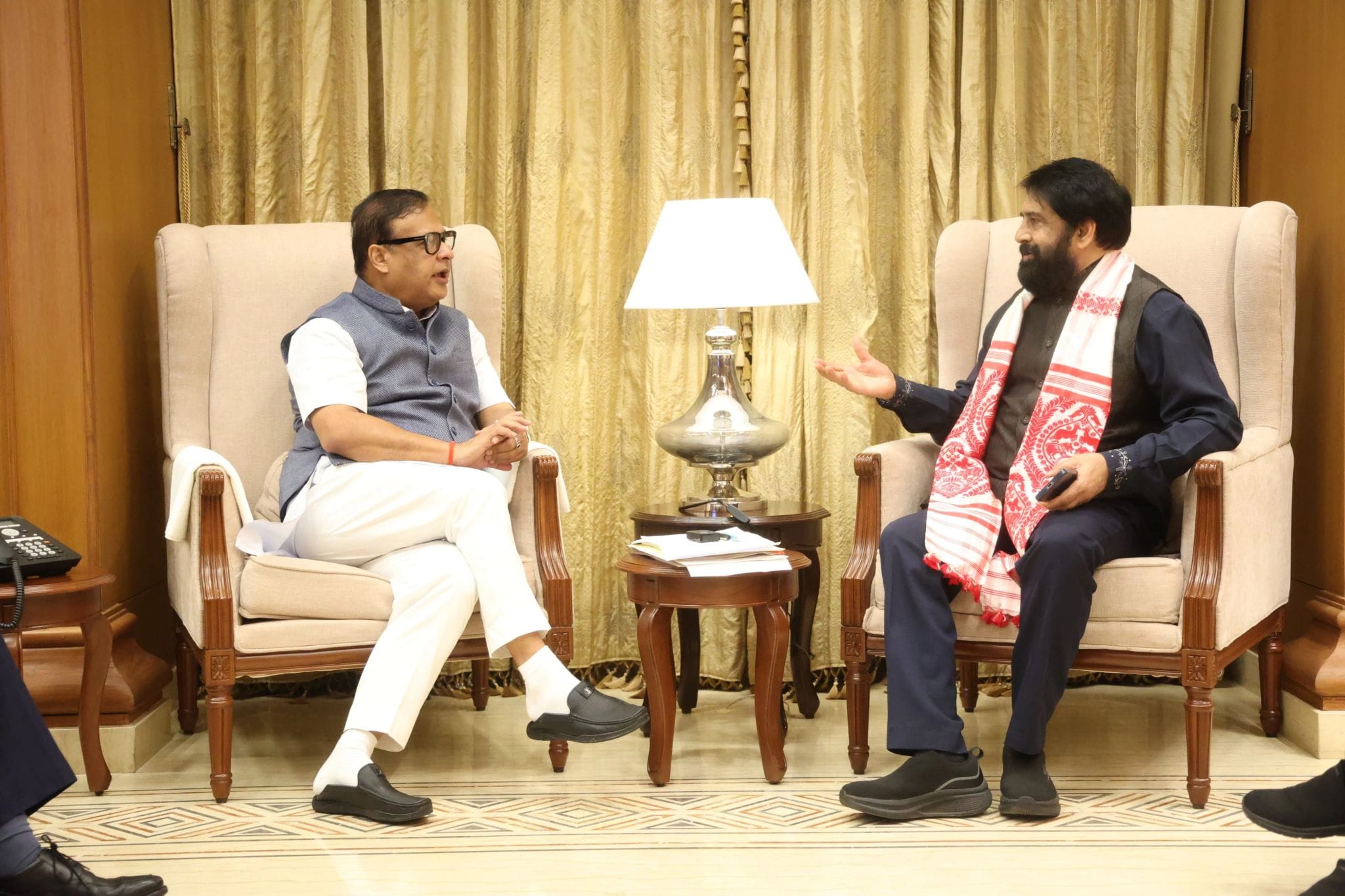
HEGEMONIQ: You began the interview with your visit to Assam and how impressed you were. So I’ll just bring us back to that. Following your visit to Assam, you highlighted something very peculiar, actually, the strong potential for strengthening ties in trade, investment and tourism. So, based on your experience there and everything that you saw, how do you envision South Africa and Assam building a closer partnership in these three areas specifically?
H.E. ANIL SOOKLAL: Well, when we met the Chief Minister(Dr Himanta Bishwa Sarma), this is one of the issues we raised. The northeast region is basically an undiscovered region for South Africa. And I would say the African continent. And I believe Assam, as I’ve just read that in terms of the fastest growing GDP of states, Assam is at the forefront of that. And I think that has brought attention to a region that traditionally one does not look at. And that is why when I arrived here, I said one of the regions that I want us to build relations with is the northeast. And the first state we went towards was Assam. And we had discussions on precisely the very areas that I’ve spoken of, where we can see Assam has tremendous mining potential. And that’s an area we can work together, given the strength of South Africa. In the agricultural sector, that’s another sector where I believe we can work together. So, there are a number of sectors where I believe, one of the things we discussed, and the chief minister said perhaps after the state elections are over next year, we should look more seriously to have exchange trade delegations. I did meet with the local FICCI chamber, and we had very good discussions with the FICCI members from Assam. And we’ve agreed to look at an exchange of trade delegations to first get to know each other’s potential and identify areas of mutually beneficial economic interaction. So, I’m keen to build on that, yes.
HEGEMONIQ: Great. I’ll conclude with this last question, Hegemoniq is initiating a shared knowledge exchange program, which basically it tries to facilitate high dialogue between young scholars across the globe. So how do you assess initiatives like these, as you rightly pointed out at the beginning, how do you suggest that initiatives like this could facilitate more diplomatic channels? And how can we best institutionalize this? Because right now, think tanks, geopolitical discussions, bodies that facilitate these, they aren’t very much formalized and institutionalized. So once this happens, how much exchange do you think can this foster between India and South Africa to increase the understanding of our geopolitical similarities?
H.E. ANIL SOOKLAL: Well, I think any think tank today, if you don’t have a dedicated youth desk, then you are missing the boat. Because as I’ve said, the youth are not our future. The youth are the shapers of our current global environment. They are so deeply involved. Of course. The youth of today are very much in the know, very involved in global developments, and want to be involved. And that is why I think it’s important that we as governments create the platforms and support these platforms for them to meaningfully engage and contribute at the present time. You know, very often we say the youth are our future. I don’t believe that. They are our future, but the present as well. And I think, you see, a great opportunity is, of course, India’s chairship of BRICS. We have a very vibrant BRICS youth forum. But how do we ensure that this forum is not confined to a select few? How do we build up when India hosts the BRICS Youth Summit, which they will? What are you going to do in terms of, like you did with the G20, to ensure that the youth, not just of major metros like Delhi, Kolkata or Mumbai, are offered and part of this process? One of the things I think your think tank can do is perhaps arrange a BRICS youth forum for the Northeast in terms of popularizing what BRICS is about, what India’s chairship is about, and what contribution can the youth of Northeast make to this? And I think our respective countries, during our chairship, this is what we said as well, let’s not confine it to a few universities and think tanks and provinces. How do we get wider dissemination? I mean, you can, in the Northeast, run a competition on your contribution to BRICS or something like that. So, we have to be creative. How do we disseminate these bodies, what these bodies are doing, make it relevant to the youth so that they contribute and see the value of it? I think that’s what we need.
HEGEMONIQ: That was an amazing answer. And I just love the creative thought behind this. You know, given today’s discussion, we would be honored to host you for a dedicated panel discussion in the upcoming future, because the themes that we discussed today, I feel they should be out. More people should be a part of it, which brings me to an upcoming inaugural panel discussion and discussion that we’re about to have, which also includes the launch of our board of advisors. The theme largely is what we discussed today, the India narrative, strategic autonomy, a lot of the terms that you use, strategic autonomy, global ambition, and regional connectivity, where our ambassador, Srikumar Menon, he would be addressing the topic, shaping the new world order, why Africa is key to India’s global ambition? So, I mean, I personally would love to see you. sharing your thoughts and vision on something similar.
H.E. ANIL SOOKLAL: look, I mean, India is hosting three major summits in 26, the AI Summit, the BRICS Summit, and of course, the Africa India Forum Summit. And all of these are critical summits. Of course. And I believe, again, a think tank like yours can play a role in terms of. We think that we know each other as India and Africa based on our historical ties, not just India, South Africa, meaning Africa, but we know very little about each other. And I said this to MAA, that the upcoming India-Africa Forum Summit, which they’ve already started discussions, it’s going to be in Delhi, either in May or August, provides a tremendous opportunity to rejuvenate the historical relations that India and Africa have. And I think, again, how do you take this whole India-Africa partnership to the people of the North East? And think tanks like yours have an important role to play.
HEGEMONIQ: thank you. Thank you so much. Thank you so much, sir, that was a lovely session. Thank you.
H.E. ANIL SOOKLAL: You’re most welcome.
HEGEMONIQ: Thank you.
[…] Read the Interview: Navigating a Multipolar World: In Conversation with the High Commissioner of South Africa in India M… […]