In Conversation
The Trajectory of India Norway Relations
In Conversation with the Ambassador of Norway to India Ms. May Elin Stener
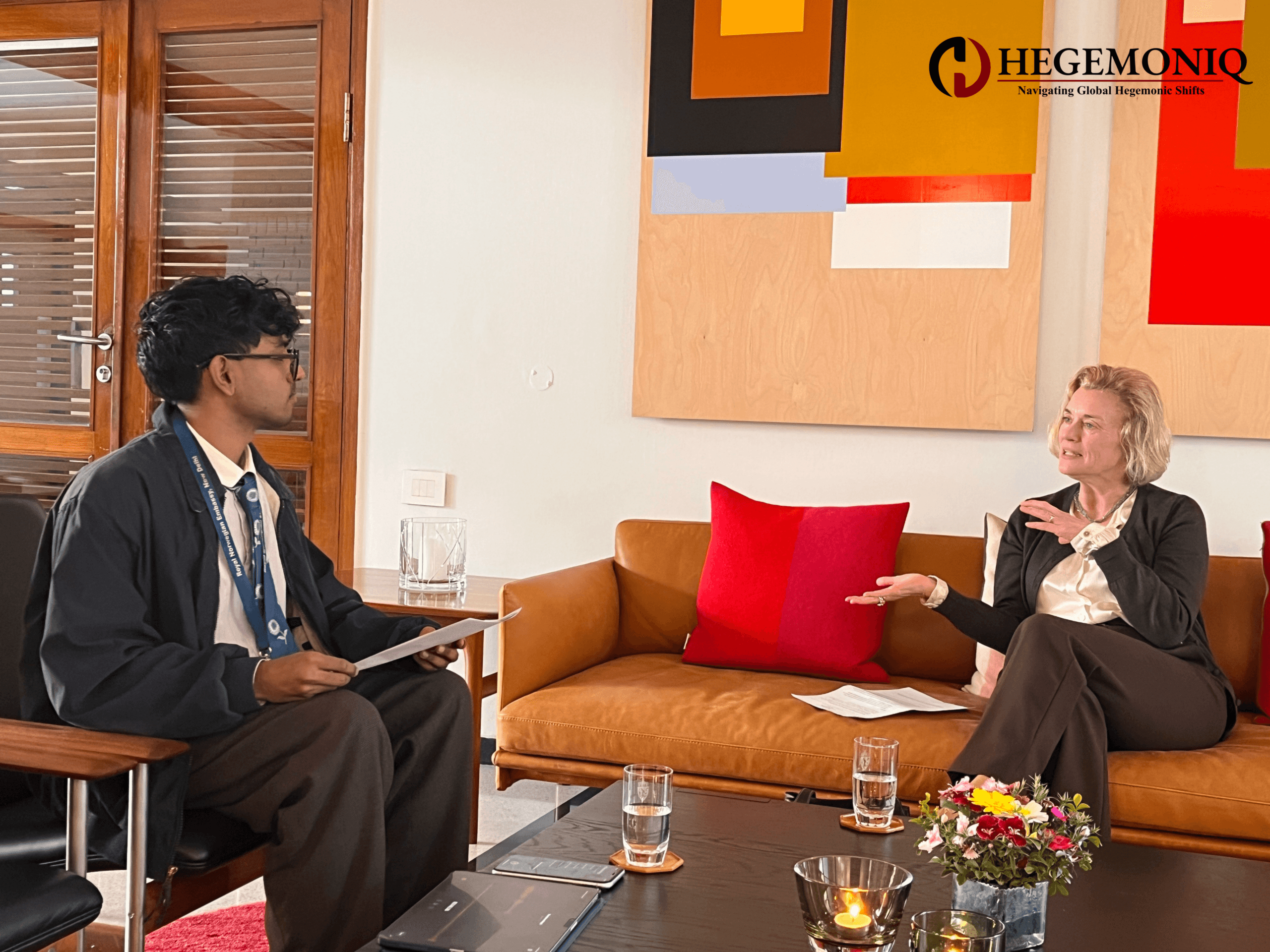
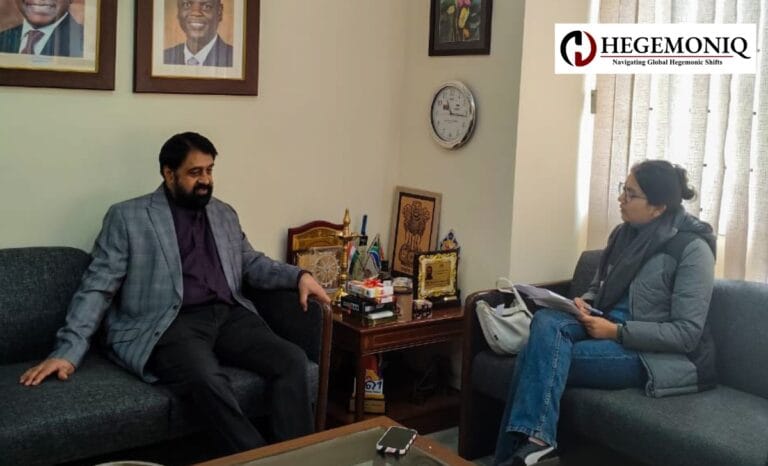
H.E. Ms. May Elin Stener in conversation with Hegemoniq’s Associate Director Bishnu Rathi.
Interviewee
H.E. Ms. May Elin Stener
Ambassador of Norway
Interview Transcript with May Elin Stener
HEGEMONIQ: So, I would love to start our conversation by asking you about your experience here in India. So, your Excellency you have arrived in India at a time of significant transformation. It is often termed as the ‘Amrit Kaal’ by our honourable Prime Minister. Beyond the official meetings and diplomatic corridors, what has been your most striking personal observation about the changing energy and aspiration of India during your tenure so far?
H.E. MAY ELIN STENER: Well, what is striking is that there is so much energy here and so many young people. Half of the Indian population are young people and that creates a lot of energy. So that is what is very striking. You know in Norway our population is just getting older, so it is good to see a very energised and young population here in India. There are entrepreneurs, researchers, and all the young people are also contributing to the growth, to the sustainability; so that’s very striking for me. Also very interesting to see how Indians are looking both backwards and forward. You are having the cultural heritage, your history with you and travelling around in the country I see a lot of the heritage and you have a lot of your own heritage on the UNESCO World Heritage Sites list and the history is always with you but still you are looking forward and you are looking forward at how can India grow even more, how can India be a power in the world. So that is really striking coming here and this has been touching for me in the last two and a half years that I have been here.
HEGEMONIQ: Ambassador, as India actively diversifies its export markets to navigate global trade volatility, including challenges like rising tariffs in traditional markets such as the United States, how do you assess the future trajectory of India-Norway bilateral trade and while our current trade volume is growing, it remains modest compared to other countries. Do you foresee that the India-EFTA Trade and Economic partnership Agreement acting as the decisive catalyst to scale up this economic engagement to a significantly new level?
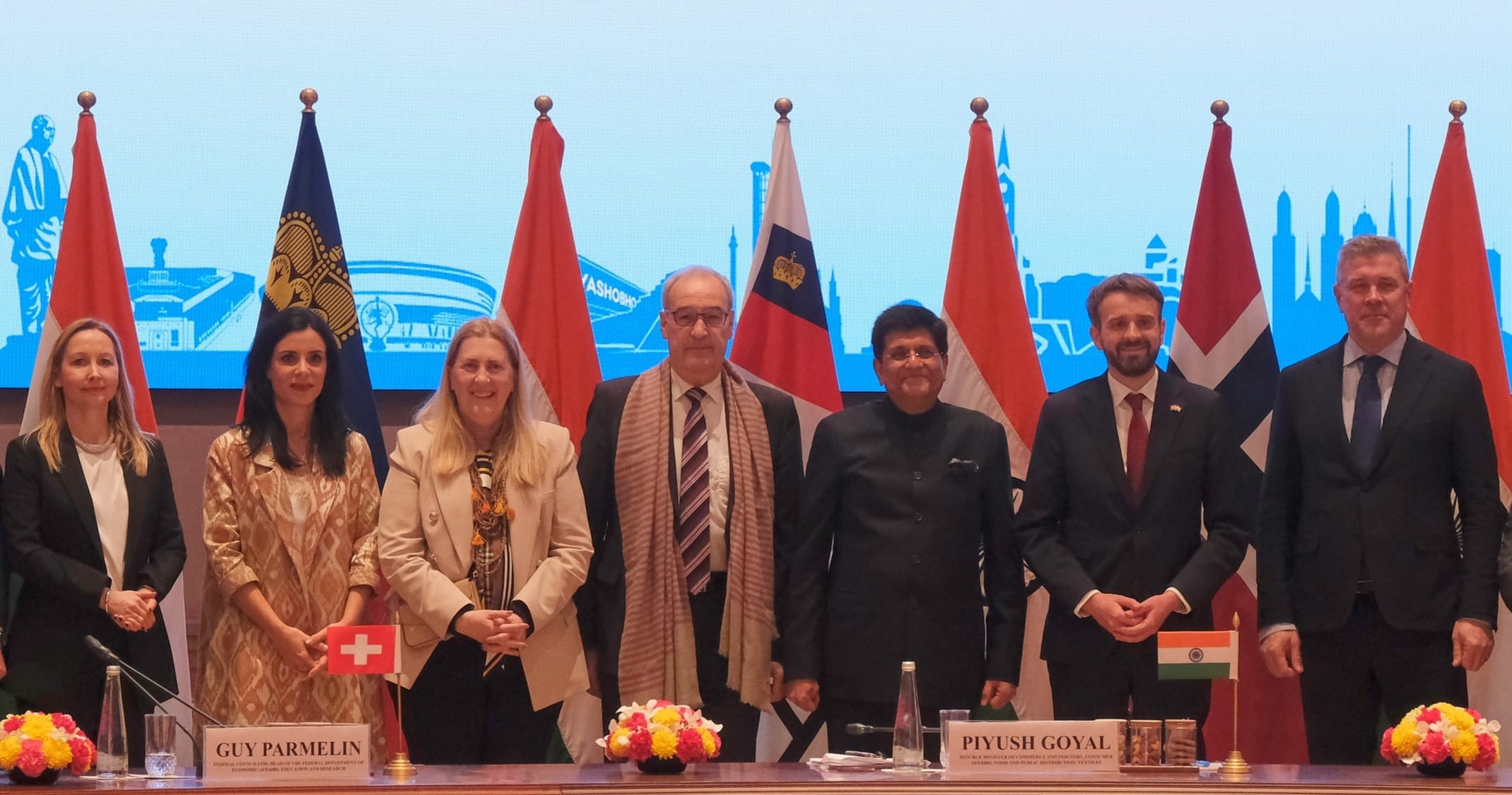
H.E. MAY ELIN STENER: Let me first say, you are mentioning tariffs, you are mentioning the changing global landscape. Norway is a small country, we are an open economy and we really believe in the rules based world order and also in rules based global trade. For example, we are very much supporting the reform process of the World Trade Organisation and the trade agreement between the EFTA countries and India which Norway is also a part of as one of the four EFTA countries. We believe trade and we believe in building down trade barriers rather than raising the tariffs. So this trade treaty is a great means for exactly that. And I also believe you know that it is a great tool for more trade between Norway and India.
And you are saying that it is not the biggest volume as it is but I am quite sure it will grow bigger. In the last ten years, trade between India and Norway has doubled. In the last maybe only five or five to eight years the number of the Norwegian companies being represented in India has more than doubled and I believe that if we look ten years forward it will grow again if not triple and the trade treaty is the reason for that.
Norway is a small country and that has ofcourse some limitations but we have very cutting edge technology in some areas. We are an energy superpower, we are delivering a lot of oil and gas to Europe now. We are the biggest supplier of oil and gas to Europe and we found oil and gas in the early 70s in Norway and we have developed very good technologies for producing energy and this technology we are now using to transition from oil and gas and fossil fuels to greener sources of energy. So all of that green energy and that is for example- wind power and sun induced power, these are some of the technologies that are being used and that we have developed for the oil and gas industries and therefore they are very good technologies. These technologies is very much in the mount here in India and the Norwegian companies are looking to India to scale up because India is so big. So that is an example where Norway is quite small but we have very modern technologies and India is so big and you can scale up here. And in that cooperation I think there is a great potential and this potential will only further develop in the next few years to come. I mentioned the energy sector which is very important, another sector which is important is the maritime sector and both India and Norway, we are maritime nations and also in that industry we have a lot of good cooperation already, that will increase lot. And there are also other sectors but these are the two most important ones.
HEGEMONIQ: Thank you Ambassador, for the exhaustive reply. You talked about maritime trade as both India and Norway are maritime countries and while we are on the topic of economy I would perhaps like to turn to one of its components-the Blue Economy. Now, Norway and India share a strong commitment to the blue economy as both nations sit on critical maritime crossroads, how is it that the India-Norway Task Force on Blue Economy evolving to address sustainable ocean management and maritime security?
H.E. MAY ELIN STENER: Well we have as you mentioned a Task Force on Blue Economy and that Task Force was established now seven years ago when our then Prime Minister came to visit India and she signed the agreement on blue economy with your Prime Minister Modi and ever since we have had this Task Force on Blue Economy. And we are also working on the blue economy on lots of different areas. I mentioned that we have a lot of cooperation in the maritime industry but also within the spaces of the Task Force on Blue Economy, we have developed cooperation on Marine Spatial Planning which we are doing quite well in Norway and India wanted to learn from some of the experiences that we have and so we have taken some of the experts from Norway to India and they have explained how they do the marine spatial planning. There have been partner projects in Pondicherry for example and we now see that India has taken this themselves and there are lots of other states in India along the coast that are interested to look into how we do this marine spatial planning. So that is one project. Budgeting and how you budget in the ravine areas and in the sea is another thing developed from marine spatial planning.
So those are very good areas where we are working together but you know talking about the blue economy and talking about the oceans and also about the rivers it is also important that we clean pollution and that we do not pollute anymore. So we also have a lot of projects in that area in the environment side that we are working together on. For example, we have one project called the Marine Pollution Project and we have lots of different stakeholders there who are cleaning the oceans, cleaning the beaches, cleaning the rivers and hopefully that will also contribute to a more sustainable development in India and we also do this in Norway so we have a lot of examples of how we have done it and we can do it very well together.
HEGEMONIQ: Thank you Ma’am for providing insights onto how India -Norway closer bilateral relationship could specially cover the area of sustainability. Now, Ambassador I am a student of international relations and one of the areas that I found to be very fascinating is ‘realpolitik’. Today we live in an era of global fragmentation. Nations have increasingly turned transactional and there is a highly polarised international world. Norway has also been a champion of peace and mediation, how do you see therefore the role of middle powers and rising powers like India in sustaining a rules based international order amidst current global scenario?
H.E. MAY ELIN STENER: Well, we live in a very difficult world now and, there are a lot of threats to the current global world order that we have and rules based world order. Norway, I said this while talking about the trade also, very much believes in the rules based world order. Of course we believe in respect for the sovereignty of each country and we will very much go up and defend those ideas. We have a lot of cooperation with India and with other countries who believe in the same ideas and we believe that we need to preserve the world order as it is. We have look at a reform of the United Nations, we have to look at reform of the World Trade Organisation, for example, a country like India, which is now the most populous country in the world, you are not well enough represented in the United Nations. You do not have a seat in the Security Council for example. Those issues we have to address, we have to look at that and we have to reform the system to make it fit for today’s world but it has to be with bearing in mind that we want a rules based world order and that we have to cooperate and not only the big countries can decide what they want and take what they want and they have to have a rules based world order.
HEGEMONIQ: Thank you. Now Excellency, as I previously mentioned, we are the first geopolitical platform rooted in North East India. So we followed your visit to Assam with great interest. And during your recent conversation with the Honourable Chief Minister of Assam Dr. Himanta Biswa Sarma, skill based education and skill based universities emerged as one of the key priority areas. Now given this interest, how do you envision Norway and Assam fostering cooperation in vocational training and skill development to better equip the region’s youth for the global economy?
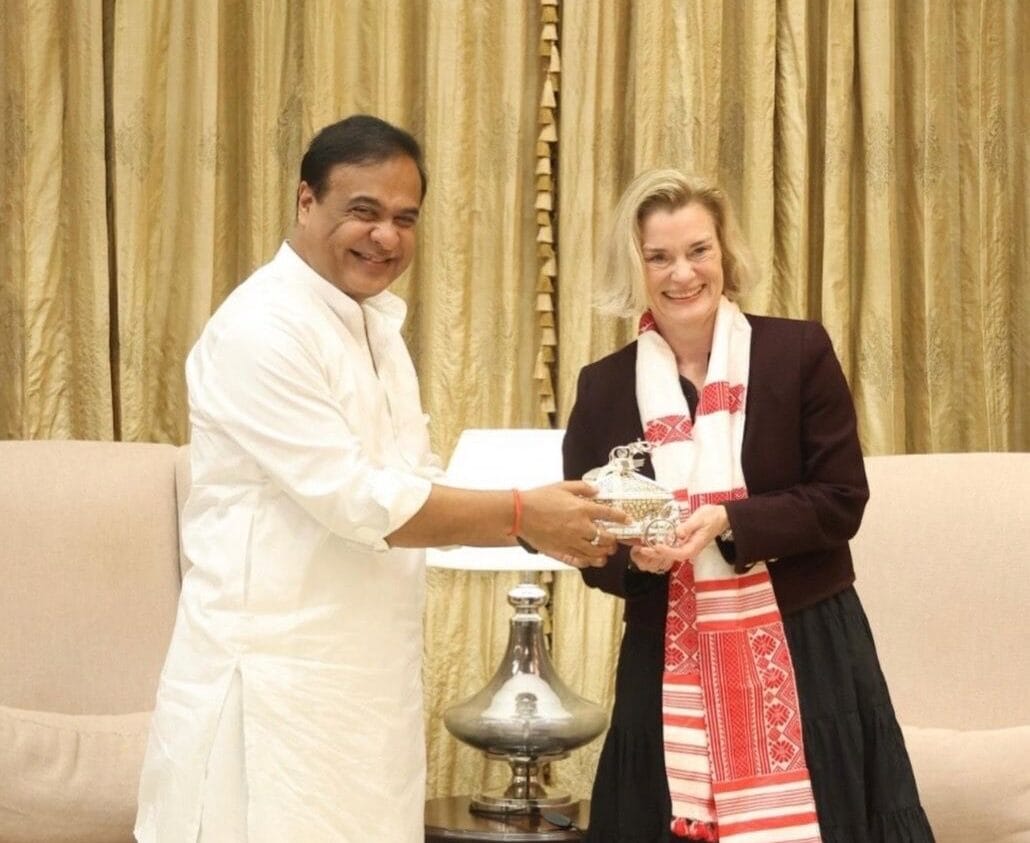
H.E. MAY ELIN STENER: Well of course, skills are crucial. And we are talking about developing the economy, we are talking about more trade between our countries and of course what skills there are to actually develop this and to have industries in both our countries and in Assam, it is important. So, I was very intrigued to hear about the skill university that is being built in Assam and I heard about it during my recent visit which is now one month ago, in December and by the way very nice visit. Always nice to visit Assam and I was there twice last year. So I met with not only the Honourable Chief Minister, I also met with the Education Minister and we talked about these issues and you know of course we agreed that skills are important and developing of skills are important. But also I would like to mention that there was a delegation from Assam and I think it was led by the Secretary of Higher Education in Assam. He led the delegation to Norway and they looked at how do we do vocational training in Norway. I did not know that we did it in a way that you find very useful to learn about but that is what they told me and they found it very useful to go and learn how we do vocational training in Norway and are taking some of the examples back with them to Assam and also then probably some of the institutions from Norway will go to Assam to see how are you doing things and see how can we cooperate in a better way. So this is a very interesting and exciting development and very exciting cooperation that we see now to have established with the state of Assam.
HEGEMONIQ: Now finally Excellency, Hegemoniq is unique because while we are the first platform of this kind rooted in Assam, our team and our outlook as I mentioned previously are truly global. We are working to bring fresh, diverse perspectives into mainstream foreign policy discourse. Drawing from your own journey, what advice would you give to young researchers like me and many others and aspiring diplomats reading this who want to navigate and shape the complex international relations of today?
H.E. MAY ELIN STENER: Well, I am very impressed by the young people in India and I told you about that when I started the conversation. So I am not sure whether you need any advice from me but what I would like to say you know is grab those opportunities that come and don’t be shy and jump into it and try and look at the world with curiosity. Try and read up and get yourself knowledge about the area that you are looking into. Those advice are always good. I also would like particularly to have an appeal to the girls and young women around that you know stand up for yourself and you know there is no reason to be more shy because you are a girl or a woman. I also hope you have that in Hegemoniq, you women and girls working. And it is important to see that we are two genders but we are also equal and we also develop a gender balanced and equal society, I think that is good both for men and women. And so I would like to appeal to you for that because that is something that I think we are a little better at in Norway than here in India. And I would very much like to support the girls and also you know stand up for yourselves, grab your opportunities, be curious but in all areas. When you read up about a country and you want to know more about the foreign policy, don’t only read about the foreign policy, read about the history, read about other areas, look into the culture- books are interesting, is there art that is interesting,- that creates a better understanding if you get a broad picture. This has also been intriguing to me being in India. Reading fiction, I learnt just as much about India as while reading a factual book about India because it gives me more understanding. So culture and literature and art are also good areas for getting an understanding about your own country, other countries and the world.
HEGEMONIQ: So that is it. Thank you so much for your valuable and perceptive insights. As a student of international relations there is a lot of fodder for thought for myself and I am pretty sure our readers who would be reading this interview would learn a lot. Besides, as I have told you, your Excellency, we are a student led initiative, so we are actively looking out to find new avenues of collaboration even with the Embassy and even in terms of research. As you mentioned there is a lot to learn beyond international relations like the history and culture and also in terms of seminars. I am very pleased to inform you that we have a dedicated European vertical so we would like to host you perhaps in the coming few months as a speaker in a panel discussion given that your insights I am pretty sure would really help not just the members of our organisation but also our readers. So thank you very much you Excellency it was a pleasure speaking with you.
H.E. MAY ELIN STENER: Thank you.