
India’s Maritime Soft Power: Amplifying SAGAR through EU Strategic Convergence
Leveraging Collaborative Diplomacy for a Human-Centered Maritime SystemThe Indian Ocean Area (IOR) represents a key component of India’s national defence as it accounts for about 40 percent of its commercial activities. Given this centrality, New Delhi needs to develop more than its strong capabilities to achieve its status as a “network security provider” and counter dangerous diplomatic tactics and regional security challenges.
In response, this policy brief investigates how India’s Maritime Soft Power is utilized through the SAGAR principle, Blue Economy initiatives, and cultural diplomacy to maintain control over maritime territory.
Critically, India can achieve effective resource management through its strategic partnership with the European Union, which will help the country establish a “human-centered” maritime system.
Introduction
As the world’s geopolitical center of gravity is shifting to the Indo-Pacific region, India is facing a dual challenge of securing its maritime front, as well as protecting the rules-based global order using various coercive tools including SAGAR (Security and Growth for All in the Region) Principle, Blue Economy initiative, and cultural diplomacy. In that matter, the Indian Ocean Region (IOR) lies at the heart of these challenges as it is the main route of trade and energy imports, along with being a crucial node that drives active economic growth rate and maintains strategic oil reserves. In this view, New Delhi’s ambitions to become a regional cybersecurity provider cannot rely solely on solid naval power. But despite the country’s military capabilities and potential to build trust-based impact through economic interdependence, sustainable development, and mutual security standards, India naval capabilities remain insufficient to secure an important and expensive maritime domain.
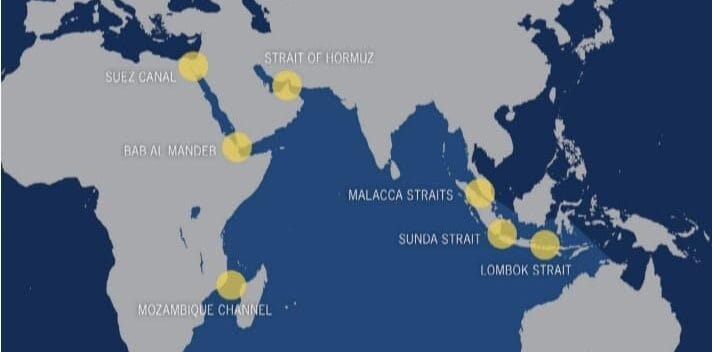
On that account, this policy brief explores India’s SAGAR doctrine as a strategic framework to address the increasing complexities throughout a fragmented Indian Ocean Region. It also seeks to assess the way India leverages cooperations, specially with the European Union, in the objective of enhancing regional influence via financial, technological, and development cooperation. To pursue these ends, this brief follows a SWOT analysis to illustrate India’s internal strengths and weaknesses in transition, as well as different opportunities and challenges.
Operationalizing Benevolence: The “Soul” of The SAGAR Manifesto
The Indian Ocean region forms the basis of India’s strategic destination, which derives from the SAGAR doctrine (Security and Growth for All in the Region) established by India in around 2015-2016 to achieve regional stability through its soft power capabilities. Unlike traditional security framework, Sagar differs by relying on promoting mutual security through its focus on shared well-being.1 To practically demonstrate its intentions, India is using Humanitarian Aid and Disaster Relief (HADR) as its main diplomatic tool as the country carried out operations “SAGAR Mission” in May 2020 to deliver 580 tons of medical aid and food supplies to five countries in the Indian Ocean during the COVID-19 pandemic.2
Yet, India’s approach to maritime strategy experiences two different assessments. Firstly, the rules-based international order is facing serious difficulties because multiple conflicts have erupted in various regions of the world over the past five years. Secondly, the current crisis of neo-imperialism is increasing its existence under the pretext of protecting national security interests.
In this regard, the Information Integration Centre – Indian Ocean Region (IFC-IOR) may serve as a solution to the problems of international trust that have emerged during periods of continuous division. It does so via monitoring regional vessel movement and maritime domain to deliver basic tracking data to partner countries. With this strategy, India seeks to achieve its goals through community partnerships by sharing knowledge and resources rather than trying to build power with the aim of harming its less powerful neighboring countries.3
Economic Statecraft via the Blue Economy
Amid escalating global disorder, the current geopolitical situation has created an unstable environment that is simultaneously destroying international rules-based order while causing humanitarian emergencies. In this context climate-induced migration remains a largely unaddressed problem, which affects coastal communities that lack basic facilities and resources. Against this backdrop, the Blue Economy provides India with an essential opportunity to establish its leadership through environmentally sustainable development. With a maritime economic zone which exceeds 2.4 million square kilometers, India is uniquely located to enhance its maritime industry and generate substantial national GDP contributions, leading to the promotion of inclusive development while addressing crucial environmental and humanitarian concerns.4
In the same logic, the Blue Economy approach forms a core tenet of India’s foreign policy. To concretize this, the Indian government has pursued an adaptive foreign policy since gaining independence while the protection of national autonomy and the development of worldwide interconnectedness through shared scientific advancements remained its primary goals.
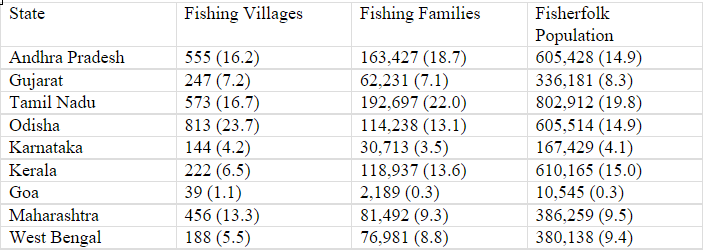
To achieve this, the growth of the Blue Economy will mainly rely on essential sub-sectors, which include fisheries that provide employment to more than 4 million fishermen (Table1), and renewable ocean energy, which aims to achieve 30 GW capacity by the end of the next decade5. In line with this, India plans to establish a network of economic interdependence with its neighbouring Small Island Developing States (SIDS) through its provision of economic possibilities and sustainable technologies.6 Ultimately, the Blue Economy theme of India aims to redirect attention from personal agendas towards the urgent need to address non-traditional security threats and achieve comprehensive development.
Strategic Multi-Alignment through Connectivity and Culture
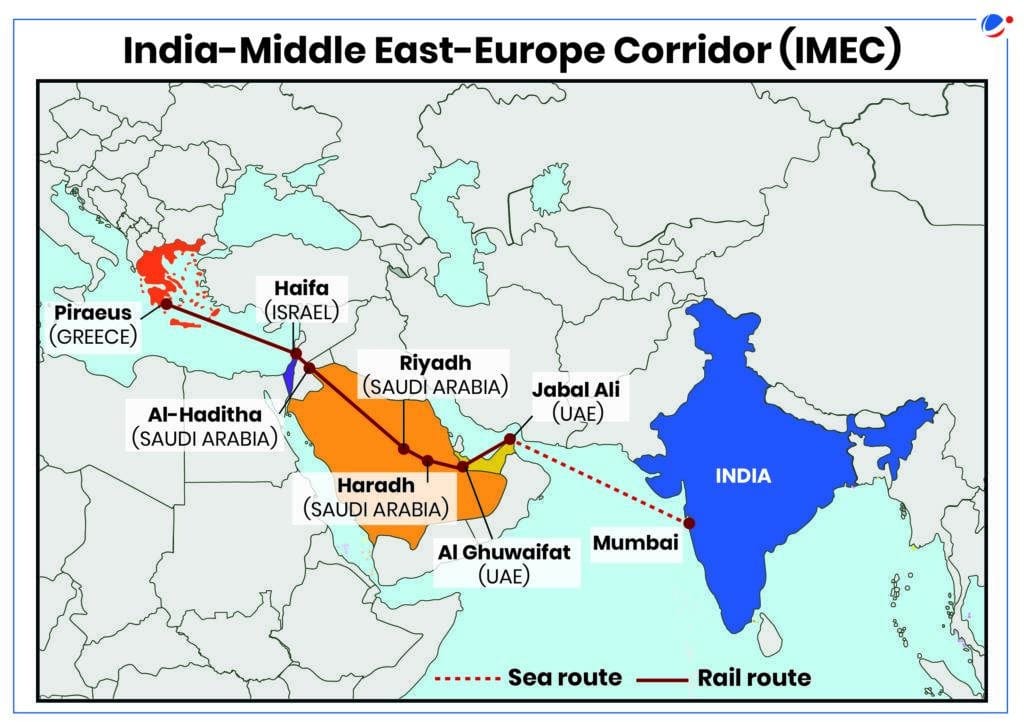
Continuing in the logic of enhancing partnership, India has accomplished several achievements. One such achievement is the announcement of the “India-Middle East-Europe Economic Corridor (IMEC)”, during the G20 summit in New Delhi on September 9, 2023.7 This project establishes the country as the main trade hub which will enable faster shipping times through its trade network. To support this initiative, New Delhi launched the Sittwe Port in Myanmar in 2023. With these efforts, India aims to support Global South’s countries while simultaneously leveraging deep and close relations with Western countries.
The ambitions of New Delhi have not stopped in logistical connectivity:, India extends this strategic vision by anchoring itself in the common civilizational experience of the Indian Ocean, and drawing on the experience of ancient spice routes. These routes, although commercial, were never just that. They also provided a platform on which cultures and ideas peoples could interact to inform a contemporary maritime strategy promoted by organizations such as the Indian Ocean Rim Association (IORA). The Association unites 23 member-states for conducting mutual operations as a basis for cultural diplomacy.8 This soft power is leveraged by the Indian Navy’s “Mission Deployments” via regular yearly ports calls in over 20 friendly countries which facilitate the naval cadet exchanges and cultural programs to enhance trust and kinship.9
Also Read: Re-strategising the Kaladan Multi-Modal Transit Transport Project: Securing India’s Connectivity to the Bay of Bengal
Strategic Assessment: SWOT Analysis
This SWOT analysis evaluates India’s capacity to project soft power in the maritime domain, combined with a brief outline of possible steps necessary to effectively operate the SAGAR doctrine.
| Strengths (Internal Factors) | Weaknesses (Internal Factors) |
| Regional Trust: The Indian Ocean countries maintain historical and cultural relations with India, which makes the latter a reliable “Net Security Provider” through its existing trustworthiness. Naval Capabilities: The Indian Navy operates strong HADR capabilities, demonstrated through its quick response missions like “Operation Samudra Setu”. Strategic Autonomy: India establishes itself as a leading power which can operate multiple international partnerships because it brings together different countries to advance the India-Middle East-Europe Economic Corridor (IMEC) project without building any ties to specific military alliances. | Resource constraints: India’s limited financial resources compared to its global competitors’ create obstacles preventing the country from completing infrastructure projects that include both Chabahar and Sittwe. Bureaucratic Delays: Complex procurement process that requires cooperation of several government agencies creates obstacles that delay the distribution of financial assistance and the implementation of development projects. Implementation Gap: The India-US security partnership has strong policy frameworks through the Sagar Initiative. However, both countries face challenges in implementing soft power projects with all international partner countries. |
| Opportunities (External Factors) | Threats (External Factors) |
| Blue Economy Leadership: The global demand for sustainable marine resources, which include renewables and fisheries, enables India to set regional benchmarks that enhance economic interdependence with other countries. EU Partnership: The EU provides India with a partner that can guarantee financial resources and technological solutions that will support its various projects through its efforts in the Green Deal and strategic independence. Diaspora and Cultural Ties: The vast Indian diaspora found throughout the Indian Ocean region has the potential to forge stronger links between people and businesses in both regions. | Geopolitical Encirclement: The geopolitical blockade creates a threat to India as rival powers strengthen their naval presence in the Indian Ocean region through maritime bases and port treaty projects. Regional Instability: Political instability that exists in neighbouring countries such as Sri Lanka, Myanmar, and the Maldives creates two problems as it may create obstacles to connectivity projects and allow foreign powers to enter the region. Climate Change: Rising sea levels caused by climate change poses an existential threat to vital partner islands, which will require India to spend significant resources that it cannot handle alone. |
Conclusion:
In conclusion, the Indian Ocean represents an essential node for both India’s security and economic objectives. In this matter, the increasing fragmentation of the global rules-based order suggests that India’s soft power instrument remains essential to achieve its aim of securing its leadership position in the region, as opposed to relying only on hard power. Following this strategy, New Delhi will not only achieve the goal of establishing itself as a benevolent “Net Security Provider” (NSP) by implementing the SAGAR doctrine, promoting the Blue Economy, and leveraging civilizational linkages, but also gaining access to necessary technological and financial resources. They can help bridge the gap created by predatory and geopolitical encirclement via integrating the European Union as a strategic partner. This collaboration is likely to better position India to counter the detrimental effects of such forces and create a resilient and inclusive rules-based maritime order in the Indo-Pacific region.
Credits


The views and opinions expressed in this policy brief are those of the authors and do not necessarily reflect the official policy or position of Hegemoniq.
Endnotes
- G. Padmaja, “REVISITNG ‘SAGAR’ – INDIA’S TEMPLATE FOR COOPERATION IN THE INDIAN OCEAN REGION,” National Maritime Foundation, April 25, 2018 ↩︎
- RAJYA SABHA, “Rajya Sabha Official Debates: MISSION SAGAR,” 2022 ↩︎
- Home | IFC-IOR,” accessed February 17, 2026 ↩︎
- MINISTRY OF EXTERNAL AFFAIRS, “Prime Minister’s Remarks at the Commissioning of Offshore Patrol Vessel (OPV) Barracuda in Mauritius (March 12, 2015),” March 2015 ↩︎
- Offshore Wind Power: India’s 30 GW Target by 2030 – JMK Research & Analytics,” May 30, 2024 ↩︎
- Invest India, “India’s Blue Economy,” 2022 ↩︎
- Satyam Singh et al., “India-Middle East-Europe Economic Corridor: A Strategic Energy Alternative,” Energy RESEARCH LETTERS 6, no. 4 (March 15, 2025), doi:10.46557/001c.123649. ↩︎
- Talha Latief Tantray, “From Peace to ‘No-War, No-Peace’: The Doctrinal Reorientation of India’s Maritime Strategy in 2025: The Round Table: Vol 0, No 0 – Get Access,” 2026 ↩︎
- European Union external action, “The European Union and the Indian Ocean Rim Association (IORA) | EEAS,” 2025 ↩︎