
Executive Summary
Reclaiming Centrality: India’s Indo-Pacific Strategy and the Contest for Regional Leadership
The Indo-Pacific region, which accounts for a large share of global trade and is the site of the pronounced concentration of current great-power competition, has become the focal point of India’s Indo-Pacific Strategy. Given this centrality, New Delhi needs to develop new institutional capabilities that go beyond diplomatic rhetoric to strengthen its position amid American unpredictability and Chinese assertiveness.
In this context, this policy brief examines how India’s claim to centrality is being operationalised through the SAGAR framework, the IKIGAI framework, the IORA chairship, and the IPMSC and Great Nicobar projects.
This brief argues that India’s approach is a balanced multi-alignment, strengthening functional cooperation with the QUAD, while maintaining parallel engagement with China and preserving its strategic autonomy. However, this centrality is not universal: it is stronger in its relations with middle powers but remains weak in its bilateral relations with Washington and Beijing. At the same time, the domestic legal and political opposition to projects like Great Nicobar adds another layer of uncertainty in its implementation.
Introduction
The Indo-Pacific region has become one of the principal arenas of contemporary geoeconomic and strategic competition in the 21st century. This region accounts for a large share of global trade, and the pronounced concentration of the current great-power competition is evident there1. Amid this evolving landscape, India, moving beyond the margins, is seeking to position itself as a pivotal power in the Indo-Pacific region. This is not a sudden development. The Act East Policy, which has been pursued for more than a decade, has gradually strengthened the partnership of India with East and Southeast Asia. But in 2026, just after the Prime Minister of Japan’s visit to New Delhi, Prime Minister of India Narendra Modi’s visits to Indonesia, Australia, and New Zealand are the clearest evidence of this change.2 This diplomacy is not a single incident but a comprehensive, well-coordinated strategy, in which defence exports, energy security, and commercial engagements are intertwined.3
This diplomacy rests on an emerging institutional architecture that includes the SAGAR maritime framework4, the newly established IKIGAI defence cooperation framework, India’s chairship of the Indian Ocean Rim Association (IORA) and the QUAD-backed Indo-Pacific Maritime Surveillance Collaboration (IPMSC), signed in New Delhi on May 26 2026.5 Together, they represent attempts to convert India’s diplomatic rhetoric into concrete diplomatic, defence, and economic deliverables. A highly concrete example of this architecture is the Great Nicobar Island Development Project, which provides the hard-power dimension to India’s expanding maritime ambitions.6
However, India’s claim to “centrality” is contested rather than settled. Modi’s recent visits are seen by some critics as reflecting an exploration of viable alternatives amid unpredictable United States and assertive China, rather than as evidence of India anchoring the regional order.7 Other analysts argue that India’s role in Washington’s Indo-Pacific strategy has diminished under Trump’s transactional approach of administration,8 even though the strategic significance of India for regional stability continues to be reaffirmed publicly.9 At the same time, India also pursued a parallel yet less-discussed pathway by gradually normalising relations with China.10 This strategy is reflected through high-level talks between External Affairs Minister S. Jaishankar and Chinese Foreign Minister Wang Yi, the resumption of direct flights, and preparations for President Xi Jinping’s anticipated visit to the BRICS Summit from 12 to 13 September 2026.11
In this context, this policy brief provides an in-depth examination of India’s Indo-Pacific strategy. At first, it provides evidence for India’s claims to centrality, then assesses the competing arguments surrounding it, analyses its structural limitations, and, lastly, provides concrete and actionable recommendations for policymakers.
The Problem: A Contested Regional Order
The Indo-Pacific has become a region of current strategic competition, accounting for the largest share of global trade and exhibiting a pronounced concentration of great-power competition. The contemporary geopolitical landscape defines two structural pressures:
US Unpredictability:
Trump has adopted a more transactional stance towards alliances in his second tenure. The American national defence strategy does not explicitly regard China as a primary strategic competitor, and it urges its allies to play a greater role in burden-sharing in the Chinese threat mitigation.12 This change took place when the United States redeployed in August 2026 its last aircraft carrier in Asia, the USS George Washington, to the Middle East. This leaves the western Pacific without a key American warship – a move that analysts suggest could be interpreted by allies as a distraction from the Indo-Pacific region.13
Chinese Assertiveness:
Ongoing military modernisation and maritime pressure have intensified regional concerns about unchecked Chinese dominance. The evidence includes the Chinese navy’s long-range ballistic missile test-launch.14 Also, following the Philippines’ formal deposition of a nautical chart of the shoal with the United Nations (a legal move asserting Manila’s maritime baseline claims under UNCLOS (United Nations Convention for the Law of the Sea)), China conducted subsequent joint naval and air force exercises near the contested Scarborough Shoal.15 Amid these shifting dynamics, India, Japan, Australia, and other middle powers have strengthened their bilateral and minilateral cooperation to uphold multilateral norms, even though the durability of America’s commitment may appear less certain.16
The Evidence: India’s Centrality Architecture
Diplomatic Consolidation
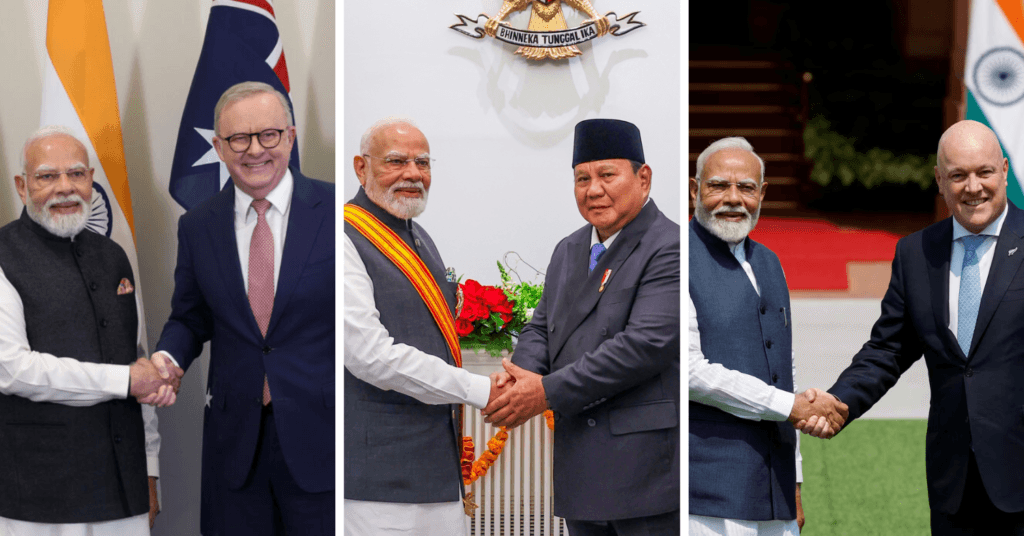
Prime Minister Narendra Modi’s three-nation trip from 6 to 11 July 2026, covering Indonesia, Australia, and New Zealand, has converted India’s long-standing Act East rhetoric into real deliverables17 in the form of defence exports, energy and critical-mineral security, and accelerated trade. It signalled a maturing multi-aligned strategy that positions India as a balancing partner across the region at a moment of American unpredictability and Chinese assertiveness. Individually modest, these instruments together extend maritime security cooperation from the Indian Ocean through the Tasman Sea, giving India logistical access and institutional presence across waters no single power could monitor alone, and establishing India as a security provider in the Southern Indo-Pacific, not only its northern quadrant.
Earlier that month, the Prime Minister of Japan Sanae Takaichi visited New Delhi. Taken as a whole, these engagements extend beyond individual bilateral relationships and point towards an interconnected regional presence. This visit is a part of a broader series of recent visits to Mauritius, Seychelles, and Japan, which is considered as a systematic sequence of India’s maritime outreach from the western Indian Ocean to the eastern maritime domain.18 Port development in Indonesia gains strategic weight as Australia and New Zealand simultaneously build maritime security cooperation, making such infrastructure defensible.
These four engagements demonstrate that India’s Indo-Pacific strategy has moved from discrete bilateral relationships towards an interlocking regional presence. None of these arrangements binds India to a single alliance structure, thereby preserving its strategic autonomy. This footprint’s durability will depend on implementation. Yet, the pattern across four capitals in 11 days nonetheless clearly indicates that India is no longer calibrating its position between contending poles but becoming a central node in the Indo-Pacific’s emerging security and economic order. Its strategy is extending beyond mere announcements and evolving into signed, implementation-ready agreements.
Institutional Building Blocks
- SAGAR (Security and Growth for All in the Region): India’s maritime doctrine for the Indian Ocean Region based on freedom of navigation, capacity-building. It was first articulated in March 2015 during Prime Minister Modi’s visit to Mauritius. Its purpose is to position India as the net security provider for the region, promoting a rules-based order anchored in UNCLOS and encouraging blue economy cooperation – sustainable use of ocean resources among Indian Ocean Region (IOR) states.19 Recently, it was extended through the perspective of MAHASAGAR (Mutual and Holistic Advancement for Security and Growth Across Regions), which expands India’s geographic and thematic scope beyond the immediate Indian Ocean.20
- IKIGAI Framework21: A land-forces cooperation framework unveiled by India’s Army Chief, General Upendra Dwivedi, on 18 December 2025 during the 3rd Land Forces Summit, which covered army-to-army coordination, joint training, disaster response, tech partnerships, and logistics interoperability among Indo-Pacific armies. It was described as a watershed moment in India’s approach to structured military cooperation.22
- IORA Chairship: Assuming the Indian Ocean Rim Association (IORA) chairship by India in 2025 provides a concrete institutional platform for India’s SAGAR strategy. Through the IORA, India could institutionalise security and economic cooperation in the Indian Ocean, where trade accounts for approximately 80% of global oil trade.23 This chairship enables India to set priorities such as financial consolidation, blue-economy development, maritime security, and technological integration. This demonstrates efforts to establish a central role in the region through multidimensional institutional leadership that extends beyond ad hoc bilateral diplomacy.
- Indo-Pacific Maritime Surveillance Collaboration (IPMSC): IPMSC was an initiative of India launched during the 11th Foreign Minister meeting of the QUAD in May 2026.24 It aims at integrating the satellite, aerial, and surface surveillance systems of four countries (Australia, India, Japan, and the United States) into a near-real-time common operating picture of maritime activity across the region, demonstrating a concrete step from dialogue toward operational capability. The information fusion centre in Gurugram has become the operations centre for this effort, underscoring India’s institutional centrality.
The QUAD Engagement Without Formal Alliance Commitment
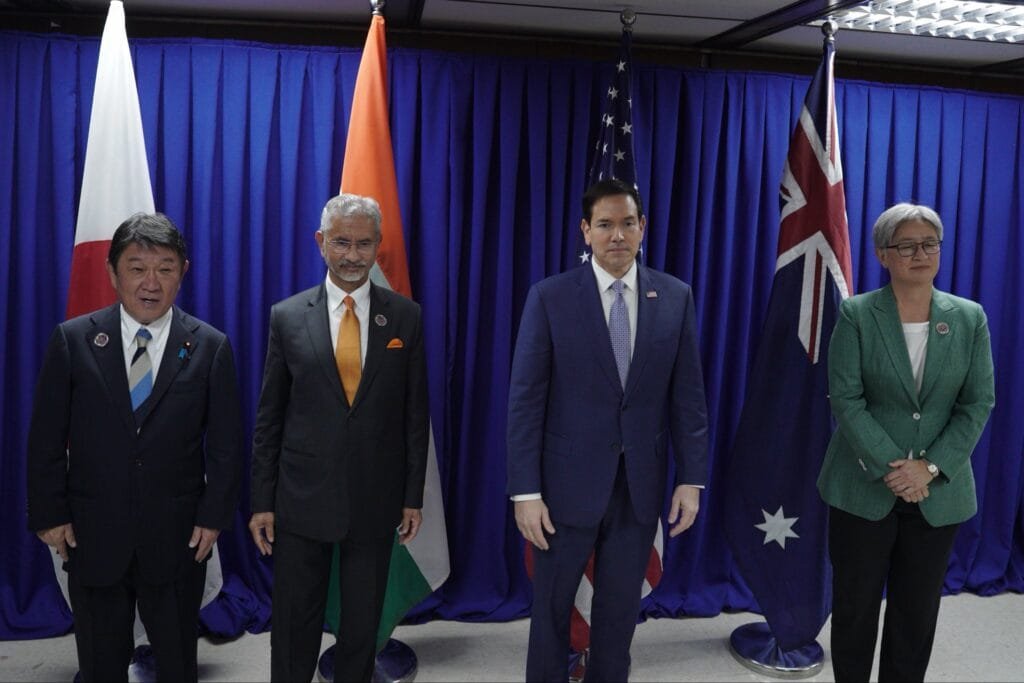
During the Foreign Ministers’ meeting in Manila, India, together with the US, Japan and Australia, reaffirmed its support for a free, open and prosperous Indo-Pacific while expressing unwavering support for ASEAN centrality. The ministers discussed maritime security, critical technologies, economic resilience, humanitarian assistance, and emerging regional challenges, underscoring the QUAD’s growing role as a platform for practical cooperation rather than a formal military alliance.25 New Delhi has consistently resisted portraying the QUAD as an anti-China alliance,26 preferring to emphasise its positive agenda centred on regional stability and development. The QUAD’s agenda has steadily expanded beyond traditional security concerns to include resilient supply chains, critical and emerging technologies, infrastructure, disaster response, and maritime domain awareness. This evolution has enabled India to deepen strategic partnerships without entering into treaty-based alliance commitments that could constrain its foreign policy autonomy.
This strategic flexibility is demonstrated in India’s simultaneous China policy. In July 2026, Union External Affairs Minister S Jaishankar met Chinese Foreign Minister Wang Yi in Manila, where he reiterated that peace and tranquillity along the Line of Actual Control (LAC) remains the pre-requisite for normal bilateral relations.27 The External Foreign Minister also voiced India’s concerns regarding fair market access, trade imbalances, and supply chain uncertainties. Both sides highlighted several concrete steps toward normalising ties following the Kazan summit in 2024, including the resumption of direct flights between India and China, the restarting of the Kailash Mansarovar Yatra, the recommencement of bilateral border trade, and the updating of visa regime.28 This parallel engagement is the core feature of India’s strategy – active participation in the QUAD while maintaining structured dialogue with China, both simultaneously.
The Counter-Argument: Centrality or Hedging?
It would not be appropriate to accept the centrality narrative without scrutiny. Three credible counter-currents merit attention.
First, some analysts suggest that Prime Minister Modi’s July trip should be understood as a search for options rather than a demonstration of regional leadership. This strategic shift should be interpreted as a hedge against uncertainty on both fronts, America and China, rather than evidence that India is holding the Indo-Pacific together. According to this analysis, the overly enthusiastic domestic commentaries risk overstating the strategic significance of this trip.
Second, analysts argue that India’s role in Washington’s Indo-Pacific strategy has reduced. According to the Hudson Institute, Trump’s transactional approach to alliances creates genuine uncertainty about the durability of US-India strategic alignment. This concern was further intensified by tensions over India’s continued purchases of discounted Russian oil; consequently, USPresident Donald Trump imposed a 50% tariff on Indian goods, including a 25% penalty for purchasing Russian crude oil.29 In February 2026, following India’s commitment to reduce its oil purchases, this tariff was reduced to 18%,30 but again in August 2026, the American Senate passed a new bill that would authorise the president to impose tariffs up to 100% on major importers of Russian oil and natural gas, along with Japan, China, and EU countries; India directly fell under the list.31 Despite this economic instability, senior Trump administration officials continued to reaffirm India’s indispensable role in maintaining peace and stability in the Indo-Pacific and ensuring a ‘favourable’ balance of power in Asia.
Third, the significance of India’s parallel strategic normalisation with China is relatively less analysed in current commentary. The analysts of the China-Global South Project (2026) argue that Sino-Indian relations in 2026 are being shaped by regional priorities and bilateral dynamics rather than by US revisionism. The clear evidence for this includes the Ladakh troop disengagement,32 the resumption of direct flights,33 the relaxation of Press Note 3,34 the resumption of institutional exchanges,35 and both countries’ successive BRICS chairmanships.36 Yet, this normalisation has its limits: in just the first half of 2026, the trade deficit with China widened to 67.1 billion dollars,37 and analysts see this as a supply-chain truce rather than a strategic reset, because border issues and fundamental differences in the Indo-Pacific region still persist.38
This complex situation challenges a straightforward interpretation of India as a pillar of the Western-aligned Indo-Pacific order. This positioning of India is best described as controlled interdependence rather than a firm alignment with any bloc, in which economic viability and strategic competition go hand in hand.
Overall, these three critiques indicate that India’s claim to centrality appears more robust in its own strategic narrative and its relations with middle powers (Japan, Australia, ASEAN countries), while it remains weaker in its bilateral relations with both Washington and Beijing.
Constraints and Fragilities
Several factors complicate the durability of India’s Indo-Pacific ascent:
- Economic Headwinds: In July 2026, besides the growing diplomatic gains, India had to face real economic strain; the rupee weakened to approximately 95.5 against the dollar (touching 96.88 intra-month), and the trade deficit widened to a record 30.4 billion dollars amid the intensifying energy and tariff pressure among Washington, Moscow, and New Delhi.39
- Implementation Risk: The durability of India’s regional presence depends on implementation: whether Sabang and Great Nicobar are built out, whether the Melbourne and Auckland dialogues convene as scheduled.
- US-India tariff and energy friction: Continued purchases of Russian oil have drawn sharpened US criticism and punitive tariffs, which strained bilateral relations, which appeared on a strong trajectory only a year earlier.
- Persistent border friction beneath the diplomatic thaw: Despite efforts towards normalisation, including diplomatic engagement to maintain peace and tranquillity across the LAC, repeated claims over border regions in Arunachal Pradesh and Ladakh, renaming of the names of the provinces, and the release of cartographic representations, remain a geopolitical friction that could undermine the progress made in recent months.
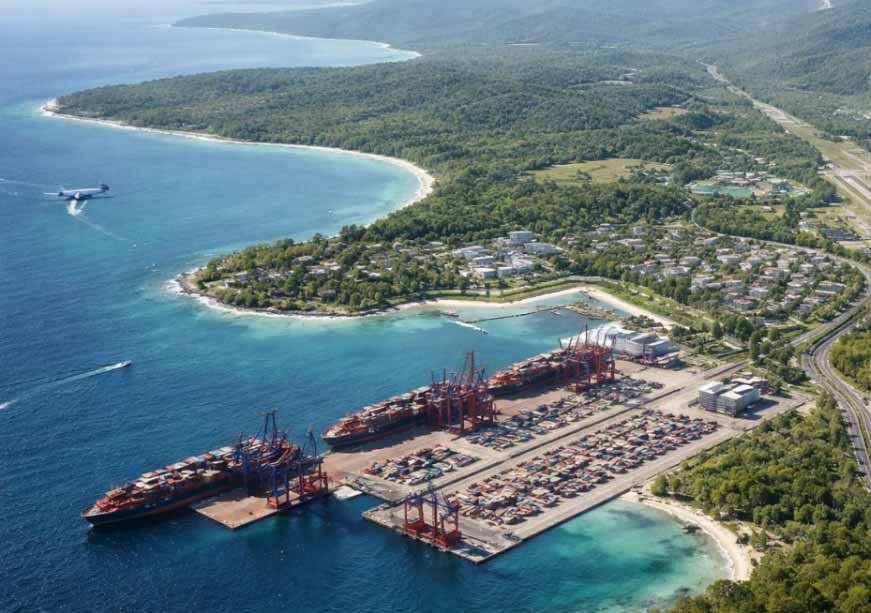
- Domestic political and legal contestation over Great Nicobar: Sonia Gandhi publicly termed it a “planned misadventure” posing an existential threat to the island’s indigenous communities,40 while over 70 scientists, conservationists, and sociologists wrote to Union Environment Minister Bhupender Yadav flagging concerns on the ‘grave and irreversible negative consequences’ of the project.41 In February 2026, the National Green Tribunal (NGT) refused to interfere with the environmental clearance for the Great Nicobar Island project, concluding that adequate safeguards have been provided but its ruling was explicitly grounded in the project’s ‘strategic importance’ rather than a rejection of the underlying ecological objections.42 Litigation continues before the Calcutta High Court, where, as per the petition, consent under the Forest Rights Act was never genuinely obtained from the Shompen and Nicobarese communities.43 This illustrates that, regardless of their strategic rationale, significant projects face real domestic legal and political friction that could delay their implementation.
- ASEAN’s own institutional fragility: The announced commitment of India towards ‘ASEAN Centrality’ depends on ASEAN’s ability to lead with credibility and purpose. The ability was complicated by domestic political turmoil, including a major corruption scandal in the country currently holding the ASEAN chair, the Philippines. This situation raises the question of whether small and middle powers meaningfully shape outcomes within an increasingly fractured international order.44
Policy Options
India has the following broad policy options available:
- Deepening issue-specific cooperation without formal alliance commitments with the QUAD and Indo-Pacific partners, which may be perceived as uncertain by partners.45
- By addressing Russian oil and tariff strain directly, stabilising relations with the USA , which could limit free energy options for India.
- Institutionalising regional leadership through sustained investment in IORA, SAGAR, and IKIGAI, which will require continuous resources and patience.46
- Accelerate the delivery of fundamental frameworks like Great Nicobar and Sabang, which, despite high capital costs, convert the diplomatic commitments into operative capability.47
- Maintaining the policy of structural normalisation with China along with the the QUAD commitments,48 regarding both paths as compatible rather than being mutually exclusive.49 Although there is a risk that the QUAD allies may perceive strategic ambiguity.
Recommendations:
India needs well-planned, sustained policy action to translate its claims of centrality from diplomatic rhetoric into operational capability. The following recommendations are addressed to policymakers in New Delhi, the QUAD partners, the US, ASEAN, regional institutions, and future analysts with a stake in Indo-Pacific stability.
- For Indian policymakers: Policymakers need to sustain multi-alignment approach and, by moving beyond rhetoric and dialogue, prioritise the concrete implementation, such as accelerating the delivery of fundamental frameworks like the Great Nicobar and IPMSC operationalisation, converting critical-minerals memoranda into operational supply agreements with defined volumes and timelines, and expanding domestic manufacturing and energy diversification to reduce structural exposure to future tariff or supply-chain shocks in order to counter the “search for options” critique with demonstrable capability.50
- For the QUAD partners (United States, Japan, Australia): The QUAD allies should recognise that India’s partnership will be issue-specific rather than alliance-based. These cooperative frameworks should reflect this approach without demanding a treaty-level commitment. Furthermore, the QUAD partners should address the growing delivery gap within the group, as analysts state that the QUAD is better at announcing initiatives than delivering results. The May 2026 Critical Minerals Initiative’s headline 20-billion-dollar figure is still a target rather than committed funding.51 Australia, as the next summit host, is well-positioned to emphasise accountability mechanisms so that every new commitment is based on actual delivery rather than merely added to existing ones.
- For the United States specifically: The USA need to keep Indo-Pacific strategic cooperation separate from bilateral trade and energy disputes to avoid undermining a long-term partnership over shorter-term transactional friction. Washington should also ensure that critical minerals commitments move beyond frameworks and translate into actual disbursement. The 20-billion-dollar mobilisation target was announced in May 2026, but actual government-backed financing remains concentrated in bilateral vehicles such as the Export-Import Bank’s letters of interest rather than in the multilateral QUAD architecture itself.52 Sustained, verifiable funding flows, not the repeated framework announcements, will be the clearest signal of Washington’s long-term commitment.
- For ASEAN and regional institutions: The regional institutions should treat India’s declared support for ‘ASEAN centrality’ as a diplomatic support for ASEAN’s own institutional credibility, especially now, when ASEAN’s rotating chairs are dealing with domestic political problems.53 This can be reinforced through expanded Track-II dialogues54 and joint maritime studies research between think tanks and universities across India, Australia, Japan, and ASEAN states, thereby building institutional ties that are more resilient to shifts in high-level diplomacy.
- For analysts and future research: Rather than relying solely on official statements, track implementation indicators like port construction timelines, dialogue-convening rates, defence co-production milestones,55 and the trajectory of India-China border talks.56 These indicators will determine whether India’s claim to centrality is being operationalised or remains largely rhetorical.
Also read: Between Principle and Pressure: India’s Strategic Autonomy in the age of G2 Competition and Tariff Diplomacy
Conclusion
India’s Indo-Pacific strategy embodies two realities. On the one hand, its projects like the SAGAR framework, the IKIGAI framework, the IORA chairship, and the IPMSC and Great Nicobar project demonstrate that India’s claim to centrality has moved beyond diplomatic rhetoric to institutional, signed, and actionable commitments. On the other hand, the volatility of the tariff cycle with Washington and the limits of economic normalisation with Beijing reveal that this centrality is not universal but partner-specific, holding more firmly with middle powers than with either superpower.
This asymmetry reveals the actual nature of India’s strategy: it is neither completely aligned nor completely neutral, but a well-planned, dynamic, and balanced approach that continually adjusts to changing circumstances.. The real test for India will lie not in its next diplomatic announcements but in their implementation: whether the ports are built on time, whether dialogue mechanisms are held as scheduled, and whether border talks reflect actual progress. Until then, India’s claim to ‘centrality’ will continue to shift between an emerging reality and a strategic aspiration.
Credits

Aradhana Devi
Senior Research Fellow at University of Allahabad

Polina Digo
Associate Editor, Hegemoniq
The views and opinions expressed in this policy brief are those of the author and do not necessarily reflect the official policy or position of Hegemoniq.
- Encyclopaedia Britannica. 2026. “Indo-Pacific: Geopolitics, Economics, History, Climate Change, and Outlook.” Accessed August 18, 2026. https://www.britannica.com/place/Indo-Pacific. ↩︎
- Institute of Geoeconomics (IOG). 2026. “India’s Indo-Pacific Pivot.” August 2026. Accessed August 19, 2026. https://instituteofgeoeconomics.org/en/research/2026080702/. ↩︎
- Business Standard. 2026. “India & Indo-Pacific Ascendancy: The Architecture of a Stabilising Power.” July 2026. Accessed August 20, 2026. https://www.business-standard.com/economy/analysis/india-indo-pacific-ascendancy-the-architecture-of-a-stabilising-power-126072100905_1.html. ↩︎
- Prime Minister’s Office / Press Information Bureau, Government of India. 2015. “English Rendering of Prime Minister’s Remarks on the Commissioning of Coast Ship Barracuda.” March 12, 2015. Accessed August 18, 2026. https://www.pib.gov.in/newsite/printrelease.aspx?relid=116881. ↩︎
- Defence News India. 2025. “India’s Indo-Pacific Centrality Is a Strategic Prize That Demands Continuous Investment in Capabilities and Diplomacy.” December 2025. Accessed August 18, 2026. https://defence.in/threads/indias-indo-pacific-centrality-is-a-strategic-prize-that-demands-continuous-investment-in-capabilities-and-diplomacy-report.16432/ . ↩︎
- Malay Mail. 2026. “India’s RM35b Great Nicobar Megaport Reshapes Strategic Indian Ocean Power Play.” May 2026. Accessed August 21, 2026. https://www.malaymail.com/news/world/2026/05/19/indias-rm35b-great-nicobar-megaport-reshapes-strategic-indian-ocean-power-play/220415. ↩︎
- The Diplomat. 2026. “India’s Indo-Pacific Strategy Is a Search for Options, Not Substitutes.” July 2026. Accessed August 19, 2026. https://thediplomat.com/2026/07/indias-indo-pacific-strategy-is-a-search-for-options-not-substitutes/. ↩︎
- Hudson Institute. 2025. “How India’s Role in US Indo-Pacific Strategy Diminished.” December 2025. Accessed August 20, 2026. https://www.hudson.org/foreign-policy/how-indias-role-us-indo-pacific-strategy-diminished-aparna-pande. ↩︎
- Deccan Herald. 2026. “Indo-Pacific Strategy: India Key for Peace, Says Trump Administration.” March 2026. Accessed August 18, 2026. https://www.deccanherald.com/amp/story/india/india-indispensable-for-peace-in-indo-pacific-trump-administration-3943121. ↩︎
- China-Global South Project. 2026. “In 2026, China–India Ties Will Primarily Be Shaped at Home, not by the U.S.” January 23, 2026. Accessed August 19, 2026. https://chinaglobalsouth.com/analysis/india-china-relations-normalization/. ↩︎
- Organiser. 2026. “India-China Border Talks: New Delhi Pushes for Peace Across LAC.” August 2026. Accessed August 20, 2026. https://organiser.org/2026/08/08/374111/world/india-china-boundary-talks-new-delhi-pushes-for-peace-across-the-lac-seeks-transparency-over-upstream-hydro-projects/. ↩︎
- Asia Society Policy Institute. 2026. “A Shift in Trump’s Indo-Pacific Strategy in 2026?” Asia Policy Brief. Accessed August 18, 2026. https://asiapolicy.asiasociety.org/p/a-shift-in-trumps-indo-pacific-strategy. ↩︎
- SecurityStudies.info. 2026. “Asia-Pacific Regional Conflicts — August 16, 2026.” Accessed August 19, 2026. https://www.securitystudies.info/conflicts/regional-conflicts-2026-08-16-0701/. ↩︎
- Julian Borger. 2026. “China Test-Fires Long-Range Missile into Pacific, Rattling U.S. Allies.” The Washington Post, July 6, 2026. Accessed August 21, 2026. https://www.washingtonpost.com/national-security/2026/07/06/china-test-fires-long-range-missile-into-pacific-rattling-us-allies/. ↩︎
- CDM (Human Reporters, Not Machines). 2026. “China Conducts War Drills Near Scarborough Shoal After Manila Files UN Sovereignty Claim.” August 3, 2026. Accessed August 21, 2026. https://cdm.press/news/asia/2026/08/03/china-conducts-war-drills-near-scarborough-shoal-and-threatens-philippines-with-head-on-blow-after-manila-files-un-sovereignty-claim/. ↩︎
- Asia Society Policy Institute, “A Shift in Trump’s Indo-Pacific Strategy in 2026?” ↩︎
- Business Standard, “India & Indo-Pacific Ascendancy.” ↩︎
- Strat News Global. 2026. “Indonesia, Australia, New Zealand: Modi Embarks on Key 3-Nations Tour.” July 5, 2026. Accessed August 20, 2026. https://stratnewsglobal.com/general/indonesia-australia-new-zealand-modi-embarks-on-key-3-nations-tour/. ↩︎
- Prime Minister’s Office / Press Information Bureau, “Remarks on the Commissioning of Coast Ship Barracuda.” ↩︎
- Nayanima Basu. 2025. “In Mauritius, PM Modi Unveils MAHASAGAR — India’s Security & Development Vision for ‘Global South’.” The Print, March 12, 2025. Accessed August 20, 2026. https://theprint.in/diplomacy/in-mauritius-pm-modi-unveils-mahasagar-indias-security-development-vision-for-global-south/2544921/. ↩︎
- The name IKIGAI stands for the six pillar principles of this defence framework: I – Interoperability and Information Sharing for seamless intelligence exchange; K – Knowledge and Professional Military Education to build shared leadership; I – International Humanitarian Assistance and Disaster Relief (HADR); G – Generative Technological Partnerships to promote joint innovation; A – Assurance for Security Partnerships to strengthen mutual confidence; I – Integrated Logistics and Sustainment to enable operational endurance. ↩︎
- ANI. 2025. “CDS General Dwivedi Outlines ‘IKIGAI’ Framework to Deepen Indo-Pacific Land Forces Cooperation at 3rd Land Forces Summit.” December 18, 2025. Accessed August 19, 2026. https://www.aninews.in/news/world/asia/cds-general-dwivedi-outlines-ikigai-framework-to-deepen-indo-pacific-land-forces-cooperation-at-3rd-land-forces-summit20251218170550/. ↩︎
- National Maritime Foundation. 2025. “IORA at 28: India’s Chairmanship and the Path Forward.” Accessed August 21, 2026. https://maritimeindia.org/iora-at-28-indias-chairmanship-and-the-path-forward/. ↩︎
- US Department of State, Office of the Spokesperson. 2026. “2026 the QUAD Foreign Ministers’ Meeting in New Delhi.” May 26, 2026. Accessed August 20, 2026. https://www.state.gov/releases/office-of-the-spokesperson/2026/05/2026-the QUAD-foreign-ministers-meeting-in-new-delhi/. ↩︎
- The Indian Eye. 2026. “India Balances China Reset with the QUAD Commitment in a Changing Indo-Pacific.” July 26, 2026. Accessed August 18, 2026. https://theindianeye.com/2026/07/26/india-balances-china-reset-with-the QUAD-commitment-in-a-changing-indo-pacific/ . ↩︎
- Indian Defence News. 2026. “the QUAD Focused on Practical Projects for Benefit of People in Indo-Pacific, Not Bloc Confrontation After China Remark.” May 2026. Accessed August 20, 2026. https://www.indiandefensenews.in/2026/05/the QUAD-focused-on-practical-projects-for.html. ↩︎
- The Tribune (India). 2026. “Border Peace Prerequisite for Normal India-China Ties, Jaishankar Tells Wang Yi.” July 2026. Accessed August 21, 2026. https://www.tribuneindia.com/news/india/border-peace-prerequisite-for-normal-india-china-ties-jaishankar-tells-wang-yi/. ↩︎
- Indian Defence News. 2026. “EAM Jaishankar Reaffirms Border Peace as Prerequisite While Pushing Trade Balance in Talks with Wang Yi.” July 2026. Accessed August 19, 2026. https://www.indiandefensenews.in/2026/07/eam-jaishankar-reaffirms-border-peace.html. ↩︎
- Aamer Madhani. 2025. “Trump’s 50% Tariffs on India Over Russian Oil Purchases Take Effect.” PBS NewsHour, August 27, 2025. Accessed August 20, 2026. https://www.pbs.org/newshour/economy/trumps-50-tariffs-on-india-over-russian-oil-purchases-take-effect. ↩︎
- The White House. 2026. “Fact Sheet: The United States and India Announce Historic Trade Deal.” February 6, 2026. Accessed August 19, 2026. https://www.whitehouse.gov/fact-sheets/2026/02/fact-sheet-the-united-states-and-india-announce-historic-trade-deal/. ↩︎
- Al Jazeera. 2026. “US Senate Passes Sweeping Russian Energy Sanctions Bill Amid Ukraine War.” August 8, 2026. Accessed August 21, 2026. https://www.aljazeera.com/economy/2026/8/8/us-senate-passes-sweeping-russian-energy-sanctions-bill-amid-ukraine-war. ↩︎
- Manoj Joshi. 2025. “Diplomacy, Sanctions, and Military Might: India’s Post-Galwan Strategies in Managing China.” ORF Occasional Paper No. 508. Observer Research Foundation, November 2025. Accessed August 18, 2026. https://www.orfonline.org/research/diplomacy-sanctions-and-military-might-india-s-post-galwan-strategies-in-managing-china. ↩︎
- NPR. 2025. “India and China to Resume Direct Flights After a 5-Year Suspension.” October 3, 2025. Accessed August 19, 2026. https://www.npr.org/2025/10/03/nx-s1-5561577/india-china-resume-direct-flights. ↩︎
- East Asia Forum. 2026. “India’s China Doctrine of Selective Derisking.” July 28, 2026. Accessed August 20, 2026. https://eastasiaforum.org/2026/07/28/indias-china-doctrine-of-selective-derisking/. ↩︎
- Ministry of Foreign Affairs of the People’s Republic of China. 2025. “List of Outcomes of the Meeting between the Foreign Ministers of China and India.” August 18, 2025. Accessed August 21, 2026. https://www.fmprc.gov.cn/mfa_eng/wjbzhd/202508/t20250820_11692676.html. ↩︎
- East Asia Forum. 2026. “China–India Rapprochement Is Tactical, Not Strategic.” May 25, 2026. Accessed August 18, 2026. https://eastasiaforum.org/2026/05/25/china-india-rapprochement-is-tactical-not-strategic/. ↩︎
- The Geopolitics. 2026. “India-China Relations in a Turbulent World: The Need for Realistic Expectations.” July 23, 2026. Accessed August 20, 2026. https://thegeopolitics.com/india-china-relations-in-a-turbulent-world-the-need-for-realistic-expectations/. ↩︎
- Asia Times. 2026. “India-China Thaw Is a Supply-Chain Truce, Not a Strategic Reset.” August 2026. Accessed August 21, 2026. https://asiatimes.com/2026/08/india-china-thaw-is-a-supply-chain-truce-not-a-strategic-reset/. ↩︎
- Institute of Geoeconomics (IOG), “India’s Indo-Pacific Pivot.” ↩︎
- The Federal. 2025. “Great Nicobar Project an ‘Ecological Disaster’: Sonia Gandhi Slams Centre.” September 9, 2025. Accessed August 21, 2026. https://thefederal.com/category/news/great-nicobar-project-sonia-gandhi-ecological-disaster-205843. ↩︎
- Deccan Herald. 2026. “Great Nicobar Infrastructure: Conservationists Raise Questions on Govt’s Controversial Project.” Accessed August 21, 2026. https://www.deccanherald.com/india/great-nicobar-infrastructure-conservationists-raise-questions-on-govts-controversial-project-3777051. ↩︎
- Mongabay India. 2026. “Green Tribunal Rules in Favour of Great Nicobar Island Project, Citing ‘Adequate Safeguards.'” February 17, 2026. Accessed August 21, 2026. https://india.mongabay.com/2026/02/green-tribunal-rules-in-favour-of-great-nicobar-island-project-citing-adequate-safeguards/. ↩︎
- Supreme Court Observer. 2026. “The Nicobar Project and the Question of Locus Standi.” July 21, 2026. Accessed August 21, 2026. https://www.scobserver.in/journal/the-nicobar-project-and-the-question-of-locus-standi/. ↩︎
- Asia Pacific Foundation of Canada. 2026. “Indo-Pacific Outlook 2026.” Accessed August 18, 2026. https://www.asiapacific.ca/publication/indo-pacific-outlook-2026. ↩︎
- Institute of Geoeconomics (IOG), “India’s Indo-Pacific Pivot.” ↩︎
- Gurjit Singh. 2025. “24th IORA Council of Ministers Meeting Concludes with Renewed Focus on Sustainability, Security, and Regional Cooperation.” Vivekananda International Foundation, June 18, 2025. Accessed August 19, 2026. https://www.vifindia.org/2025/june/18/24th-IORA-Council-of-Ministers-Meeting-Concludes-with-Renewed-Focus-on-Sustainability. ↩︎
- Geopolitical Monitor. 2026. “The Great Nicobar Project: India’s Indian Ocean Power Play.” July 13, 2026. Accessed August 20, 2026. https://www.geopoliticalmonitor.com/the-great-nicobar-project-indias-indian-ocean-power-play/. ↩︎
- Asia Times, “India-China Thaw Is a Supply-Chain Truce.” ↩︎
- East Asia Forum, “China–India Rapprochement Is Tactical, Not Strategic.” ↩︎
- The Diplomat, “India’s Indo-Pacific Strategy Is a Search for Options.” ↩︎
- The Indian Eye, “India Balances China Reset with the QUAD Commitment.” ↩︎
- Discovery Alert. 2026. “US Critical Minerals Investment and Mining School Funding in 2026.” Accessed August 20, 2026. https://discoveryalert.com.au/critical-minerals-mining-school-funding-workforce-investment-2026/. ↩︎
- Asia Pacific Foundation of Canada, “Indo-Pacific Outlook 2026.” ↩︎
- Observer Research Foundation (ORF). 2023. “The Indo-Pacific Oceans Initiative: Towards a Coherent Indo-Pacific Policy for India.” Accessed August 21, 2026. https://www.orfonline.org/research/the-indo-pacific-oceans-initiative-towards-a-coherent-indo-pacific-policy-for-india. ↩︎
- Business Standard, “India & Indo-Pacific Ascendancy”. ↩︎
- The Geopolitics, “India-China Relations in a Turbulent World” ↩︎