

Executive Summary
India–Timor-Leste Relations: Small States and Soft Power in the Act East Policy
The Act East Policy is a strategic approach to guide India’s rise as an influential regional actor. This policy is based on three pillars: culture, commerce, and connectivity. Via these three tactics, India hopes to advance its agenda and emerge as an alternative to Chinese regional influence.
This policy brief will look at how soft power tactics are currently being used to achieve this agenda. More specifically, this brief will analyze why soft power strategies are more effective with small states. To make this analysis more concrete, this brief will look at how India has been able to leverage India–Timor-Leste relations to advance its Act East Policy through soft power approaches.
Introduction
Launched in 2014 and initiated by Prime Minister Narendra Modi, the Act East Policy is a diplomatic initiative looking to modernize the original Look East Policy from the 1990s. The Act East Policy seeks to transform economic engagement into concrete and strategic partnerships. It focuses on three main pillars: culture, commerce, and connectivity, and aims to ensure a stable regional balance by engaging with Southeast Asian and Indo-Pacific states. More specifically, this policy aims to foster proximity with ASEAN (the Association of Southeast Asian Nations) members, South Korea, Japan, and Australia. With the growth of Chinese influence as a way to counter American interference, China has emerged as a key partner. However, overreliance on this Far East actor has sparked the desire to counter Chinese influence as well. For this reason, Indian proximity to ASEAN countries is strategically important.
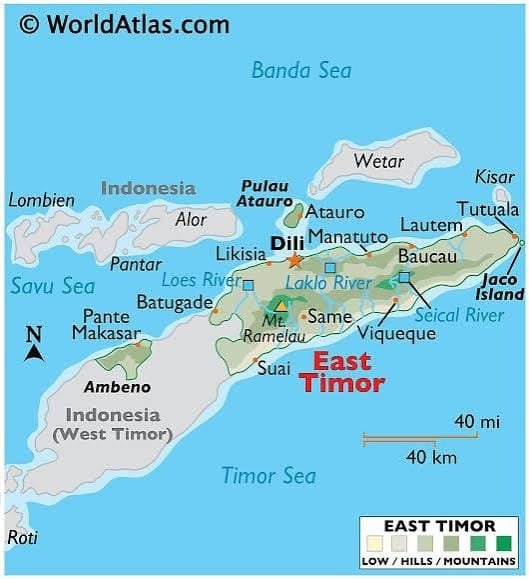
In order to advance this policy, India has been leveraging the small state of Timor-Leste. Located in Southeast Asia and with a population of a little over a million people, Timor-Leste has emerged as a key strategic country for India due to its geographic location. Located in the Timor Sea, Timor-Leste allows India to increase its presence and monitoring in the eastern part of the Indian Ocean. This allows India not only to foster its relationship with significant actors such as Australia and Indonesia, but also become more strategically engaged in the broader Indo-Pacific such as the South China Sea and maintain neutrality in territorial disputes.
Furthermore, Timor-Leste has recently joined ASEAN, helping India strengthen its diplomatic ties with the association, a key pillar of the Act East framework. Moreover, via development programmes and soft power tools, India has assisted the development of Timor-Leste, primarily through capacity building and investment in the country’s blue economy. With Timor-Leste’s ambitious goal of transitioning to an upper-middle-income country by 2030, India is an important development partner for the country.
For this reason, this policy brief will look at the extent to which India’s soft power strategy advances India’s Act East policy, beginning with a conceptual framework, followed by an examination of two soft power strategies, SWOT analysis, and policy recommendations.
Analytical Lens
“Soft power” can be defined as the ability to persuade or influence another country’s behavior through cooperation rather than coercion or force. It moves away from the traditional military and economic approaches and is based on culture, political values, and development policies. It is regarded by political scientists such as Joseph Nye (2023) as a better approach to achieving long-term cooperation by building legitimacy through partnerships. Additionally, Nye argues that soft power is more effective in building relationship with small states.1
Small states serve as leverage for big states because they act as diplomatic multipliers. A diplomatic multiplier is a tool or strategy that increases a state’s influence and effectiveness. It focuses on collaboration rather than the traditional focus on the military. Small states can serve as diplomatic multipliers through niche diplomacy. The logic behind this is that small states have limited resources and, hence, focus on specific areas. In this case, Timor-Leste holds a niche specialization in the blue economy given the country’s biodiverse waters. Furthermore, small states excel at coalition building. Organisations like ASEAN allow small states to gain a voice in international matters. India has great interest in increasing its proximity to ASEAN and exerting its influence, which is also a part of the Act East.2
The intersection between these two factors will be further evaluated through the SWOT analysis.
Soft Power Strategy: Development Cooperation
One of the soft power tools India has leveraged is development cooperation in areas like governance assistance. The Indian Technical and Economic Cooperation programme has trained over 60 East Timorese civil servants. The diplomatic training covers crucial current topics such as cybersecurity.
Furthermore, India has played a key role in developing infrastructure in the East Timorese education sector. The 2019 UN-India Development Partnership has funded an ICT (Information and Communication Technologies) education programmeme to improve the ICT skills of teachers and students in the Oecusse region. As a result, 23 schools in the region have access to computer, innovation, and robotics labs, allowing them to build basic ICT skills, such as writing a CV. This project focuses on providing real-life skills to increase local capacity. Due to the project’s success, there are plans to scale this project nationwide.3
From both of these initiatives, we can see that development cooperation has brought regional visibility and trust towards India. Not only that, India is able to counter China’s significant investment in development, largely under the BRI (Belt and Road Initiative), in Timor-Leste. Furthermore, via development programmes, India is able to further two significant Act East Policy goals: enhance regional connectivity through infrastructure and strategic balancing by countering China’s influence.4
On the other hand, while India has gained benefits from these initiatives, there are still significant challenges India is facing. Timor-Leste remains significantly influenced by Australia and Indonesia for historical reasons. Having been under Indonesian control for 24 years and then having Australia as a main partner during independence, both of these countries play a pivotal role in Timor-Leste. Therefore, there is limited space for a third player to come in. This challenge is further compounded by the limited physical presence of India in Timor-Leste. Only recently, in 2024, has India opened a physical resident embassy in the country, representing an obstacle for long-term engagement. Moreover, Timor-Leste faces domestic political instability. Thus, development benefits are many times taken by domestic elites. This is a limitation that has not been addressed by India and is crucial if India wants to have a real impact in the country.5
Soft Power Strategy: Diplomatic and Multilateral Engagement
India has been a key partner in supporting Timor-Leste’s accession to ASEAN. ASEAN is an organisation of Southeast Asian states, of which Timor-Leste has been a member since October 26th, 2025. Firstly, one of the accession rules to ASEAN is to have sufficient institutional capabilities. India allowed Timor-Leste to open an embassy in New Delhi, showing that Timor-Leste has the capacity to carry out diplomatic missions and engage in diplomatic relations with global powers such as India. Secondly, India has assisted in the preparation of Timor-Leste’s accession to another ASEAN principle, the ASEAN Free Trade Area. This principle involves significant domestic changes in order to compete with other markets. By supporting Timor-Leste’s accession to the WTO in 2024, Timor-Leste managed to shift its domestic laws to fit into a global trade agreement. These domestic laws are key to entering the ASEAN Free Trade Area. Furthermore, by providing Timor-Leste with a non-reciprocal preferential tariff, India allowed Timor-Leste to develop its exports in order for the state to be able to compete in a free trade area.6
Moreover, through diplomatic engagement, India has been able to advance the country’s maritime security system. By fostering an Indo-Pacific alignment, India has included Timor-Leste in several national initiatives such as Aero-India 2025. This event allowed East Timorese officials to explore “Made-in-India” defence platforms, contributing to the country’s security strength and helping advance India’s defence exports to Southeast Asia. While bilateral initiatives are still pending, programmes like Aero India 2025 offer Timor-Leste expertise to expand and develop its maritime security capabilities. Future programmes are planned to tackle specific regional challenges such as piracy and illegal fishing in the eastern Indian Ocean.7
From both of these diplomatic and multilateral engagements, we can see India actively seeking to advance its Act East Policy. One of the core areas of this policy is the focus on maritime security. Through diplomatic exchanges like security forums, India is able to foster security partnerships to promote regional stability and counter regional dominance. Additionally, another core area is economic cooperation and development. By being actively involved in trade agreements with Timor-Leste, a current ASEAN member, India is able to boost trade and attract investment from the world’s fastest-growing region.8
Nevertheless, India faces significant challenges in the realm of diplomacy. Firstly, there are cultural differences and connectivity challenges. There are currently no direct flights from India to Timor-Leste. This prevents in-person connectivity such as tourism or cultural exchanges. Furthermore, there are also language barriers. Timor-Leste’s official languages are Portuguese and Tetum. At first sight, this should not be a challenge. However, mixed with Timor-Leste’s complex regulatory system and property ownership, Indian investment in Timor-Leste remains limited.9
SWOT analysis
This SWOT analysis explores India’s soft power strategy in Timor-Leste and looks at the current challenges faced by the latter.
| Strengths | Weaknesses |
| Regional Trust: India is not involved in regional rivalries or is seen as a threatening actor. By focusing on regional development, India fosters regional trust. Expertise: India is one of the fastest-growing countries worldwide. Together with its growing population, India has been able to develop expertise in several sectors such as defence and infrastructure. Global influence: As a global power, India is able to exert its influence to achieve its results. As seen with Timor-Leste’s accession to ASEAN, India as a global power was able to create diplomatic ties needed for Timor-Leste to join ASEAN. | Resource Constraints: Despite its global influence, India remains financially constrained. Therefore, it lacks financial capacity to create more soft power initiatives to establish itself. Historical ties: India lacks historical ties to Timor-Leste. Diplomatic ties with Timor-Leste were only established in 2002, after Timor-Leste’s independence. Dynamic competition: As a result of historical ties, existing competition in Timor-Leste is a challenge for India. Both Indonesia and Australia have strong ties to the country, longer than India does. |
| Opportunities | Threats |
| Development ambition: Timor-Leste has the ambition of becoming an upper-middle-income country by 2030. Therefore, the country welcomes development initiatives and bilateral agreements that would help achieve that goal. Countering China mindset: With the recent regional sentiment of countering Chinese influence, India emerges as a regional alternative. Strengthening cultural ties: Through Timor-Leste’s openness to bilateral programmes and agreements, India has the opportunity of strengthening its cultural ties to the country. | Regional dominance: Chinese regional dominance is still present and relevant to India. India depends on China mainly for trade, and therefore risks upsetting a key partner in return for greater regional influence. Vulnerability to climate change: Timor-Leste is highly vulnerable to climate change, which poses a possible threat of shifting priorities. Taiwan: Taiwan–China future relationship poses a threat towards regional stability. With this also comes the threat of possible external influence, which can promote further instability. |
Policy recommendations
Monitoring and evaluation
In order to ensure long-term results, India should strengthen its monitoring and evaluation systems. Throughout this policy brief, the issue of domestic elites capturing benefits from development programmes was raised. This challenge poses a threat to the social impact these programmes can achieve. This is relevant because soft power heavily relies on a country’s attractiveness. If India becomes unaware of its social impact in the country, its soft power becomes limited.
Focus on community-level projects
India wishes to become a more influential power in the Indo-Pacific region, with a focus on maritime security. Therefore, India should implement strategically targeted projects in coastal communities. Today India’s development projects and diplomacy are fairly scattered around Timor-Leste. If India addresses coastal communities and starts development initiatives and diplomatic engagements there, India is able to build strategic influence. As discussed in this policy brief, given external influence, India has a hard time imposing itself as another influence in the country. Hence, targeting specific communities overcomes this challenge, and allows India to use its resources effectively.
Build Timor-Leste-based innovation labs
Most of the initiatives discussed in this brief surround East-Timorian officials having to go to India for training. India should build in-person labs and programmes in order to increase its influence. Currently, East-Timorian officials having to travel to India presents somewhat of a hustle. If India is able to build local training programmes, it can achieve continuous long-term capacity-building.
Also Read: Reclaiming Centrality: India’s Indo-Pacific Strategy and the Contest for Regional Leadership
Conclusion
In conclusion, India’s soft power has been key in advancing strategic partnerships, especially with small states such as Timor-Leste. Both its geographical location and strategic geopolitical position places Timor-Leste as a strategic partner in helping India achieve its Act East Policy. Moving away from the hard-power strategy has allowed India to remain an alternative to Chinese influence. However, India faces several challenges ranging from cultural and historical ties to dynamic and regional dominance and competition. In order to overcome these obstacles, India should strategically implement its soft power mechanisms in well-thought-out communities, which could support the Indian agenda of the Act East Policy. Furthermore, to deal with the lack of cultural ties India has with Timor-Leste, India should focus on building in-person hubs to foster in-person connectivity.
Credits


The views and opinions expressed in this policy brief are those of the authors and do not necessarily reflect the official policy or position of Hegemoniq.
- Nye, J. S. (2023). Soft Power and Great-Power Competition. https://link.springer.com/content/pdf/10.1007/978-981-99-0714-4.pdf?pdf=button ↩︎
- Seixas, P. C., Mendes, N. C., & Lobner, N. (2023). The Paradox of ASEAN Centrality: Timor-Leste Betwixt and Between. https://brill.com/downloadpdf/title/60399.pdf ↩︎
- UNDP. (2021). ICT Skills and Knowledge for Youth in Timor-Leste (iSKY-TL). UNDP. https://www.undp.org/Timor-Leste/projects/ict-skills-and-knowledge-youth-Timor-Leste-isky-tl ↩︎
- Seixas, P. C., Mendes, N. C., & Lobner, N. (2023). The Paradox of ASEAN Centrality: Timor-Leste Betwixt and Between. https://brill.com/downloadpdf/title/60399.pdf ↩︎
- Seixas, P. C., Mendes, N. C., & Lobner, N. (2023). The Paradox of ASEAN Centrality: Timor-Leste Betwixt and Between. https://brill.com/downloadpdf/title/60399.pdf ↩︎
- Soares, F. G., & Guterres, A. D. S. (2024). THE AMBIGUITY OF Timor-Leste’S RELATIONSHIP WITH ASEAN: EXPLORING EXCLUSIONARY PRACTICES AND MEMBERSHIP PROCESS CHALLENGES. https://ijsoc.goacademica.com/index.php/ijsoc/article/download/1213/1035 ↩︎
- National Maritime Foundation. (2026, July 3). SECURING MARITIME INTERESTS IN THE PACIFIC — ADVANCING THE INDIA–PAPUA NEW GUINEA PARTNERSHIP. National Maritime Foundation. https://maritimeindia.org/securing-maritime-interests-in-the-pacific-advancing-the-india-papua-new-guinea-partnership/ ↩︎
- Soares, F. G., & Guterres, A. D. S. (2024). THE AMBIGUITY OF Timor-Leste’S RELATIONSHIP WITH ASEAN: EXPLORING EXCLUSIONARY PRACTICES AND MEMBERSHIP PROCESS CHALLENGES. https://ijsoc.goacademica.com/index.php/ijsoc/article/download/1213/1035 ↩︎
- Seixas, P. C., Mendes, N. C., & Lobner, N. (2023). The Paradox of ASEAN Centrality: Timor-Leste Betwixt and Between. https://brill.com/downloadpdf/title/60399.pdf ↩︎